Music was not a huge part of my earliest childhood. I split my time between the two sides of my family, spending the majority with my evangelist mother, who listened to very little other than Christian music and the occasional Stevie Wonder’s Greatest Hits or Grammy nominee CD, and visiting my father, who listened to nothing but top country hits. I wasn’t particularly interested in either, so I spent the majority of my time watching Disney movies in my earliest memories before discovering the joy of the original PlayStation and Pokemon on my Game Boy Pocket and diving headfirst into those.
That started to change, though, when my dad went through a phase. He had bought a new laptop computer and got addicted to making mixed CDs. He made tons of them, mostly for himself, but also for friends and family. And these discs weren’t just made up of Country music; instead he was collecting choice cuts from classic Rock artists like AC/DC, Aerosmith and ZZ Top and mixing them with some of the best hit-makers of the ’80s like Bryan Adams and Don Henley. Eventually, he made me my own CD, filled with 80 minutes of music I fell in love with. This was the beginning of my musical awakening.
That awakening continued through three other major events. The first was the release of Guitar Hero, which I was swept up in like everyone else in my school. I was a stranger to almost everything included in the setlists across Guitar Hero II and III, which were critical in introducing me to some of the greatest Rock acts ever and some of my favorite bands and artists of all time. The game was also responsible for getting my brother into guitar for real, a passion and skill he still maintains to this day.
Up next was a major Christmas gift from my grandparents, who wished to encourage my newfound and growing love for music: my first iPod. Some of my friends had some of the earlier-gen iPods by the time I received my 3rd gen iPod Touch in 2009, so I was a late adopter it as I was for most technology during my youth. This was a game-changer for me. Gone were the days when I was linked to a single CD on my portable player on a trip. Now I could listen to as much music as I could imagine at the time and was exposed for the first time to playlists and the almighty shuffle.
The advent of the iPod in my life was paired with a subscription to a music-focused magazine: Rolling Stone, which introduced me to hundreds of artists, songs and albums I had never heard of while also re-affirming the sort of work I wanted to do in my life going forward. By the time I graduated 2-and-a-half years later, I was the proud owner of thousands of digital songs and had a full ride to Texas A&M University-Commerce to study journalism.
While I attribute the above events as the major catalysts for kicking off my love of music that has dominated the next 15+ years of my life, my switch from iTunes to Spotify during my college years was also a major one. It certainly detracted from the sense of ownership I had over my own collection that I had built up both via digital and physical purchases over my earlier years of fandom, but it also uncapped the potential music I could listen to. Suddenly, I was listening to dozens of new albums annually and my knowledge and understanding of music continued to expand exponentially.
Over the course of all of this, I have catalogued my favorite music in various ways, but have never had a combination of time, dedication and satisfaction with my results to share them in a formal way.
That has now changed.
Many members of my family know that I have been working on various lists including my top artists, albums and songs for essentially the last 15 years or longer. I have polled various members of my family for their own lists at times and had countless discussions with friends about my favorite music. My college thesis was written about the effect our first favorite band (Aerosmith, in my case) has on our musical tastes and sociological identities going forward. I have gotten married to a wife who is also passionate about music and comes from a family that saw more concerts in a year than I had probably seen in my entire life up to that point coming from my rural upbringing in Northeast Texas. I have become a journalist, now on my 13th year in the business with a byline that stretches across more than 10 publications.
Through it all, I have never stopped listening, cataloguing, listing, and thinking about putting together my big lists celebrating my all-time favorite music.
As I have gotten older and expanded my musical horizons, this task has only gotten more difficult. Naturally I’ve listened to many more artists in 2025 than I had in 2012. But while that has made the task more vast, it has also made it more comprehensive. I have spent untold hours listening to music all across the spectrum over the course of that time, from my Hard Rock beginnings, to a Country renaissance, the rise and death of EDM in the mainstream, the rise and continued success of Hip-Hop, a litany of incredible musical scores from the greatest composers of today, and everything in between.
And now, finally, I am ready to share with you my list of the 100 greatest artists I have heard to this date.
This is a list that will no doubt continue to evolve over the course of my life, but it is a fitting snapshot of my years of listening so far and is a celebration of the artists that have blown me away the most. Rather than looking at each of these entries as a full summation of each artist’s full history, I invite you to look at it instead as an appreciation of their greatest moments, the peaks of their careers whether still going strong today or a distant memory from years past.
Singular artists, bands and composers are all represented, but I did clean up the list with some noted collaborators for some rather than taking a spot on the list from someone else further down the line in cases where I thought it made sense (Bruce Springsteen together with the E Street Band, for example, even though the band itself would also earn its own spot on the list if I put it together that way). Other than that, there were no limits placed on who or what could qualify for this list, so you will find a huge variety and some names that you probably won’t find on many other similar lists.
Obviously, there’s no way to really objectively rank the 100 greatest musical acts of all time, but these are the ones that have spoken the clearest to me. I will do my best to illustrate why in the entries ahead.
With that, happy listing and thanks for reading.
-Andrew Burnes
100. Greensky Bluegrass
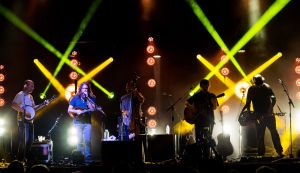
Although Greensky Bluegrass has amassed an impressive catalog over the course of their 25-year career, they are relatively new arrivals in my own musical rotation after my introduction to the group on a trip to Colorado with my wife and her immediate family in Fall 2024. While they were there to see Andy Frasco and the U.N. at Red Rocks, I was immediately blown away by the show’s closer, this 5-piece jam band from Michigan playing epic and extended cuts of some of their best work like “Worry for You” from 2018’s Stress Dreams. Sadly, I ended up having to leave the show early, but listening to this gorgeous music, taken over the top with accompaniment from pianist Holly Bowling, framed in the natural amphitheater under a full moon left an immediate impact and the group has enjoyed a status of growing relevance in my musical repertoire ever since.
99. Martin O’Donnell

Noted Collaborators: Michael Salvatori and Steve Vai
Few can illustrate the impact video game music can have on a generation better than the work of Martin O’Donnell, famed composer of the music of the Halo series that dominated the mindshare of the younger millennial generation and revolutionized video games throughout the 2000s. While much of Halo’s success can be attributed to the game’s revolutionary control scheme, expansive scope and soda-fueled LAN and, later, Xbox Live parties, I firmly believe the series would not have landed the way it did without O’Donnell’s epic score setting the tone and atmosphere for one of gaming’s most iconic franchises. The test of truly great TV/Film and Video Game music is whether it holds up outside of the medium it originally accompanied. Listen to collaborator Steve Vai’s nearly uncontrolled riffing on a remix of one of O’Donnell’s greatest works in “Reclaimer” and try to tell me it doesn’t.
98. Restless Heart
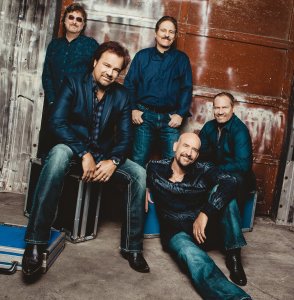
I think there’s something in our brains that makes us chemically predisposed to truly great combinations, dichotomies, and merges. The evidence for this is everywhere from the joy we get from mixing chocolate and peanut butter to our earliest fascinations with chemical reactions like fire or the synthesis of various metals into works of art. This works for other art forms as well and music is no exception. There’s something special about the merging of multiple genres and influences, and I think you’ll find that continue to be a theme on this list as we move forward. Restless Heart are legendary for picking up on the Country-Rock combination pioneered by groups like The Eagles and Allman Brothers Band and taking them into the contemporary in the late ’80s and early ’90s. No song more perfectly encapsulates this than “The Bluest Eyes in Texas.” Am I biased as a native Texan myself that heard this growing up? Perhaps. But I’m also a sucker for that mix of wistfulness, earnestness and heartbreak that this song, and band, capture so well.
97. J Mascis
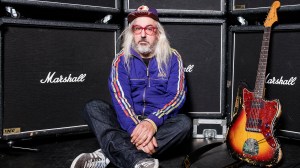
Few singer/songwriters have connected with me as much as J Mascis did during my late high school and early college years. While he was perhaps most famous as the leader of ’90s Alt-Rock group Dinosaur Jr., my introduction to Mascis came many years later when he was impressively selected as one of the top 100 greatest guitarists of all time by Rolling Stone in 2012. At that time, Mascis was fresh off of his first major solo release, Several Shades of Why, and after listening to it in its entirety at the time, I probably would’ve put it up there with the greatest albums ever written. While that star has faded somewhat in the many intervening years since, I still consider it a remarkably consistent and well-written album, and it certainly does a great job of putting Mascis’ heartachingly beautiful acoustic guitar work front and center. But as a superfan, even I couldn’t have been prepared for Mascis’ 2014 follow-up Tied to a Star, which hit me during a time of great happiness and optimism, yet also angst, sadness and loneliness during my time as the editor of my college newspaper The East Texan. I probably listened to dozens of new albums that year and Tied to the Star, armed with Mascis’ best work to date including “Me Again” and “Trailing Off,” earned my top spot as album of the year as printed in the pages of the since shuttered publication. Mascis has released two other great LPs since including 2018’s Elastic Days and 2024’s What Do We Do Now, both spaced out perfectly enough to hit me at other major periods of my life. I don’t know how many more full-length works the 59-year-old Mascis has in him going forward, but he can rest assured I will be there to celebrate any and all of them.
96. Camper Van Beethoven
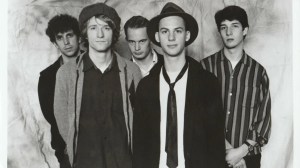
While the power, enthusiasm and garage-bred passion of Punk Rock has been blunted over the years with the advent and popularity of “Pop Punk,” classic groups like Camper Van Beethoven are there to remind us that these groups were onto something special. While other legendary groups like Ramones and The Clash take much of the spotlight, for my money, you can’t beat the pure, joyful and twisted Punk energy that the lesser-known Camper Van Beethoven captured on their anthemic “Take the Skinheads Bowling.” Decades later, filmmaker Michael Moore brought their sound to a new generation through his equally legendary (and still poignant) documentary Bowling for Columbine. I’m thankful he did; I may never have discovered them otherwise.
95. Jane’s Addiction
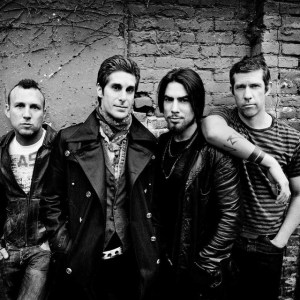
Guns N’ Roses takes all of the headlines and much of the credit for the transition from the peacocking Arena Rock of the ’80s to the harder, rawer angst and rebellion of the ’90s, but Jane’s Addiction, which also came out of the LA Sunset Strip, is certainly worthy of some of that credit. Even today, their seminal Nothing’s Shocking LP is a 45-minute, whirlwind of unapologetic Rock n’ Roll revolt powered by Steve Perkins’ untouchable groove behind Dave Navarro’s towering guitar work that feels like it can barely be contained by the studio. On top of all of it is Perry Farrell’s snarl taking aim at virtually anything that moves. It may not be as mainstream as “Welcome to the Jungle” or “Paradise City,” but “Pigs in Zen” hits every bit as hard.
94. Olive Klug
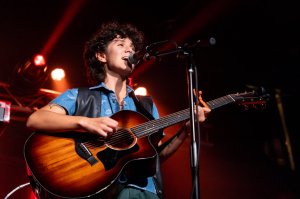
My most recently discovered artist cracking this list as of February 2026 is Olive Klug, a singer-songwriter I was introduced to as the opening act of John Craigie at a show just last month. Later on, you’ll learn more about Craigie and his penchant for introducing a litany of some of the greatest underground artists to me, but of all of those I’ve seen open for him, Klug is the newest on the scene and with the smallest catalog of work to her name at just 45 tracks across a few singles, EPs and two albums (though the most recent, Lost Dog, clocks in at under 30 minutes, so even its status as a full LP is nebulous). So great is Craigie’s penchant for introducing new artists to me that perhaps my most anticipated aspect of seeing him has become his opening act. As soon as Klug opened her mouth at this most recent show, I knew he had done it again. The list of acts I’ve gotten the chance to see live growing up in a small rural town fairly removed from any major venues is relatively small, but it’s no stretch to say that Olive is the most talented live singer I’ve ever heard in person. I was so blown away by her live voice that her studio work initially struggled to keep pace, particularly starting at the beginning of her brief catalogue with her debut EP “Fire Alarm” from 2019. However, by her first full-length LP, 2023’s Don’t You Dare Make Me Feel Jaded, she had developed into a bonafide talent capable of delivering one of the greatest albums since the turn of the decade. Her follow-up Lost Dog may not quite hit the same heights, but it still has plenty to offer between the dual punches of opener “Taking Punches from the Breeze” and penultimate ringer “One Dimension.” Without a doubt, Olive has become an artist that is worth dropping everything else to listen to and I will watch the remainder of her hopfully long and storied career with great interest. As should you.
93. The Evening Rig
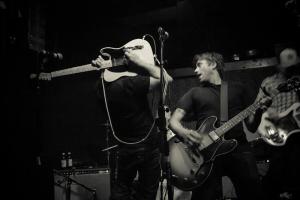
With a current monthly listener count of 93, it’s unlikely this Minneapolis-based band espousing, as they put it on their own Facebook page, “beer soaked Rock N’ Roll” are making it on too many top artists lists. But if I can introduce a single person to the earnest ode to fleeting love (and all-time Independence Day classic) “The Hilltop Pines,” as Game Informer podcast host Matt Helgeson did for me years ago, then I’ve done alright. A stalwart example that great music is being made all the time and it would be impossible to capture and celebrate it all.
92. Mitsudo Suzuki
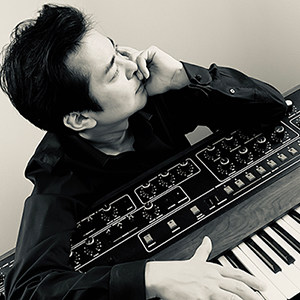
The experience of a Final Fantasy VII evangelist’s first experience with Final Fantasy VII Remake in 2020 under the context of the start of the COVID-19 lockdowns is hard to explain to someone who doesn’t have the same affection for the source material, but the best word I can think of to illustrate it is “euphoric.” While a lot of that comes down to seeing beloved characters like Cloud, Aerith and Sephiroth rendered in gorgeous modern quality combined with the game’s legitimately fantastic real-time RPG battle mechanics and deeper examination of the iconic setting of Midgar, there’s no question that, unbeknownst or not, the game’s gorgeous and lovingly crafted score played a major role in that experience. No singular moment hammers that home like Aerith and Cloud’s “Midnight Rendezvous” in the mid-game set to an original score composed by Mitsudo Suzuki. While the piece never appears in any other Final Fantasy VII release, it somehow sounds nostalgic with its mix of dreamy optimism and underlying sadness; a perfect representation of the character of Aerith herself. If you’ve experienced that as a longtime fan, you know how incredible that moment is and thus how crucial and laudable the work of Mitsudo Suzuki is to the overall experience.
91. James Newton Howard
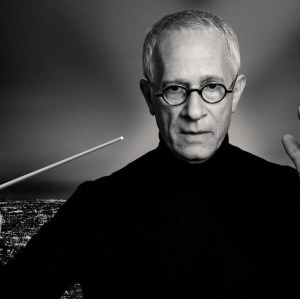
While you may find this list to be highly representative (and some may even argue over-representative) of composers associated primarily with video games, I would be remiss not to also include some of the most prolific film scorers of our age. And few have reached the prolific and powerful heights of James Newton Howard. The man has scored well over 100 films including such eclectic hits as Pretty Woman, Space Jam, Dinosaur, Atlantis, Treasure Planet, Peter Jackson’s King Kong, The Dark Knight, The Hunger Games series, the Fantastic Beasts trilogy and The Sixth Sense. Indeed, I have been listening to and enjoying this man’s contribution to our modern film soundscape for my entire life, but for my money nothing beats the astonishing beauty of the piano-led (and perhaps poorly named) “Newt Says Goodbye to Tina,” which is essentially the closer (and showstopper) of the original Fantastic Beasts and Where to Find Them
90. M83
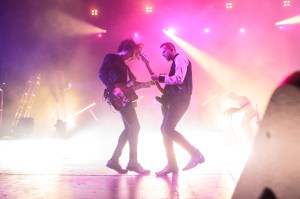
Some groups release the right song at the right time, are launched to varying stages of superstardom on the heels of it, and never look back. That was the case for M83 in the Fall of 2011 with their seminal hit “Midnight City,” the lead single for Hurry Up, We’re Dreaming, which may as well have been a debut album even though the French electropop brainchild of Anthony Gonzalez had been around for the decade prior. As a junior in high school (who happened to pay attention religiously to the weekly free songs Apple would hand out on iTunes that “Midnight City” was a part of) I was at the perfect age to get swept up in the dreamy anthem and the hypnotic electronica of the rest of the album that soon followed. Nearly 15 years later, M83 still maintains a weekly Spotify listener count north of 13 million and “Midnight City” is well over a billion plays. It hasn’t gotten old yet.
89. Yasunori Mitsuda
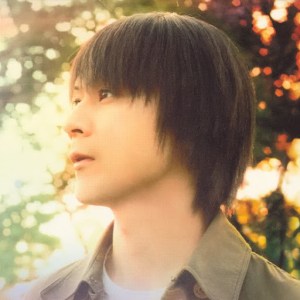
In the ’90s, two brilliant composers changed the art of video game music forever. We’ll be discussing one of them later on in this list. The other is Yasunori Mitsuda, famed composer of the legendary Chrono Trigger, as well as well as the entire Xeno series and, most recently, Sea of Stars. The fact that Chrono Trigger was his first time leading music composition on a project is unbelievable considering the quality on hand; so many tracks from that game are so memorable and, I would argue, a major reason why that game is still so beloved today. No track better exemplifies how music can elevate a moment in the minds of all who experience it like “Corridors of Time,” which plays as the player comes face-to-face with a major time-bending twist in the latter half of the game that recontextualizes everything they thought they knew about the state of the world. It’s one of those moments that everyone remembers, and there’s no doubt the work of Yasunori Mitsuda is a big part of why that is.
88. Iggy and the Stooges
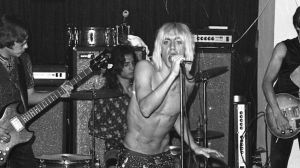
It’s sometimes hard to grasp in 2025, but with Rock n’ Roll still hitting its stride in the ’60s and ’70s, it wasn’t unusual for entirely new genres to emerge overnight with seminal releases like Black Sabbath’s self-titled debut, The Velvet Underground’s debut alongside Nico and Kraftwerk’s Autobahn. While Raw Power was technically not the first release from noted nutcase Iggy Pop and company, it captured the true emergence of Punk Rock that was soon followed up by such acts as Ramones and The Clash. Few albums have held up as well all these years later, either; armed with just 8 tracks and clocking in at just under 35 minutes, the album is as lean and mean as Iggy himself. The seminal “Search and Destroy” and the album’s title track generated the most spins in the ’70s, but for my money, the showstopper is the dark and brooding, yet somehow still groovy “Gimme Danger.” Equal parts unpredictable, wild and energetic, Iggy and Stooges truly broke new ground in 1973 and their work hits just as hard over 50 years later.
87. Austin Wintory
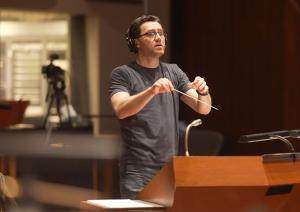
While many composers, particularly within the video game industry, are unsung heroes, Austin Wintory is one of the few that has broken through to become something of a household name. All it took was the delivery of one of the greatest scores of all time through his work with Journey, a game that relied almost exclusively on its music to deliver its most emotional moments putting Wintory’s swirling, string-laden masterstroke front and center. He’s been a made man ever since, scoring dozens of high profile projects including Assassin’s Creed, and Hades II as well as more underground hits like The Banner Saga and The Pathless. He’s even crossed over into TV/Film to notable success. But for my money, his masterwork remains Journey‘s endlessly emotional triumph.
86. Billy Joel
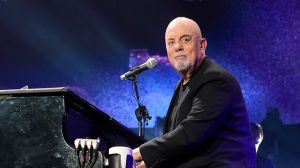
Billy Joel is one of those mainstays in the U.S. music scene (more than 160 million records sold worldwide, fourth-best selling solo artist in the U.S.) that is so entrenched and beloved you would be forgiven for not realizing that he hasn’t released any new works since 1993 (i.e. before I was born). But when you’ve got the kind of world-beating hits that Joel does, (the seminal “Piano Man,” the inescapable “Uptown Girl,” etc.) perhaps it did make the most sense to quit when he was ahead. Joel’s catalogue is varied enough that there are any number of jumping on points for his 32m+ monthly listeners on Spotify to have become infatuated. For me, it was his Jazz-influenced magnum opus 52nd Street, a beautifully slim, 9-track tour de force of triumph topped by the unstoppable Side 2 combination punch of “Half a Mile Away” and “Until the Night.” I’ll never forget the time I was taking off on a plane for a work trip, already missing my wife and cats, just as the latter hit its biggest crescendo. I’ve held it in rare air ever since.
85. Florence + The Machine
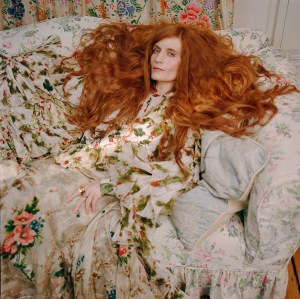
Indie titan Florence + The Machine have managed to take their late ’00s outbreak and continue to stay in the public sphere through a string of quality releases and, critically, collaborations with Pop icons like Travis Scott, Calvin Harris and, most recently, Queen Taylor Swift herself. But through it all, that first impact of 2009’s Lungs remains the most prominent in my own musical rotation, particularly the darkly catchy “Rabbit Heart,” which I think still stands among the all-time great power-backed pop anthems of all time. Florence Welch’s iconically haunted vocals play no small part in that song’s, and the band’s, lasting appeal.
84. Waxahatchee

I first discovered Kathryn Crutchfield’s Indie Rock project Waxahatchee through her 2017 release Out in the Storm and was immediately impressed by the evocative force of standouts like “Silver,” making her an immediate one to watch for future years. So you can imagine my surprise when she and her backing band took a hard pivot toward Lucinda Williams-inspired Country-Rock with Saint Cloud and doubled down on subsequent releases I Walked with You a Ways and, particularly, last year’s Tigers Blood to fantastic effect. While this new sound threatens to overshadow her previous work, taken together they unveil an impressively diverse songwriter that easily ranks among my favorite modern rising stars.
83. Takeshi Hama
Noted Collaborators: Hajime Wakai, Shiho Fujii, Mahito Yokota
Compounding the issue of video game composers not getting the recognition they deserve is the determination from companies like Nintendo and From Software to not properly credit its composers on an individual track basis. As a result, despite writing incredible pieces of music, composers like Nintendo’s Takeshi Hama have never had their much-deserved time in the limelight, a failing that I am happy to do my part to rectify. While Hama joined with fellow composers Shiho Fujii, Mahito Yokota and Takeshi Hama to compose the epic score of The Legend of Zelda: Skyward Sword, which may yet be my favorite of the series’ OSTs to date, as best I can tell, Hama himself wrote many of the pieces I consider to be the best of the works. Listen to ROZEN’s update of his fantastic original titled “Romance in the Air,” and I think you’ll get an inkling of what I mean.
82. Tadayoshi Makino
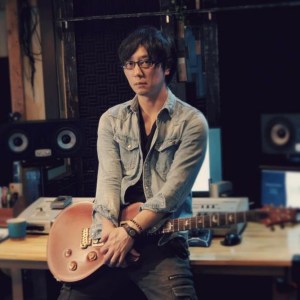
Yet another under-the-radar Japanese composer, Tadayoshi Makino has quietly been building up an extremely impressive body of work in recent years through works appearing in Final Fantasy VII Remake and Rebirth (which, at this point, are almost objectively two of the greatest works of art of all time) as well as Monster Hunter World and Final Fantasy XV. There are a number of standout works to his name on these OSTs, but none better encapsulates his ability to build tension and arrive at incredible payoffs like “JENOVA Quickening,” the epic, multilayered piece of music that serves as the driving background of the notable showdown with its namesake near the climax of Final Fantasy VII Remake. For newcomers, it’s a memorable track that heightens the tension brilliantly during a memorable encounter. But for fans of the original, it is THE reason to remember the encounter and is responsible for one of the all-time great musical moments of the 2020s
81. Stephen Malkmus and the Jicks
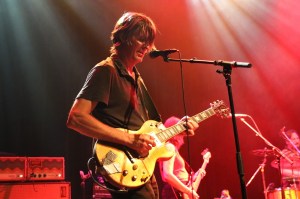
Stephen Malkmus and the Jicks are a mostly unknown Indie Rock band formed out of the death of the much more successful ’90s Indie band Pavement. While its output has been intermittent ever since, every time new music is released by this group it feels like a major event for the select-few that count themselves among their roughly 50,000 monthly listeners. As someone who pretty much completely missed the age of Pavement in the ’90s and only discovered their work through their two most recent releases, 2014’s Wig out at Jagbags and 2018’s Sparkle Hard, none of that really matters. These are two albums that glisten through their consistent tracklists full of contemplative, meditative, off-kilter, and, above all, effortlessly catchy works. Perhaps no song better exemplifies all of these traits than Jagbags’ “Lariat,” a brilliant, three-minute nugget of wistfulness and humor that has been lodged in my brain for the past decade-plus.
80. Bill Elm and Woody Jackson
One of the great things about Red Dead Redemption and its prequel-sequel Red Dead Redemption II is its dedication to authenticity, which goes far beyond the bounds of the game’s story, characters and gameplay. Rockstar releases the biggest, most premium video games in the world, but rather than continuing down the Grand Theft Auto: San Andreas route of stacking its casts with star power like Samuel L. Jackson and Axl Rose, since Grand Theft Auto IV the studio has put much more emphasis on elevating unknown stars delivering incredible performances. Perhaps no one illustrates that better than John Marston voice actor Robert Weithoff, a legitimate rancher whose only real credit is lending his iconically raspy performance to that character. But that attitude extends to the games’ music, as well, particularly in the first Red Dead which united relative unknowns Woody Jackson and Bill Elm to compose the game’s phenomenally atmospheric score. While Jackson continued to work with Rockstar on Grand Theft Auto V and Red Dead Redemption II, this appears to be the only major credit to Elm himself. I’m highlighting both artists here because there was something magical about their collaboration on the first Red Dead title, resulting in what is easily my favorite Rockstar score of all time. For a great example, listen to “Exodus in America,” which seamlessly merges this palpable sense of haunting foreboding and dread with beauty and grace in a way I don’t think I’ve ever heard replicated in any other piece of music to date.
79. Darlene Love

There are a number of early Pop stars’ careers that were enhanced by the composition and producing skills of the highly influential (and creepy) Phil Spector. The Ronettes are perhaps most well-known for his touch (in more ways than one), but his influence stretches far beyond their ’60s hits and includes such artists as The Crystals, Ike and Tina Turner, and Righteous Brothers, and even more legendary artists like Ramones, Leonard Cohen and The Beatles themselves. But for my money, nobody took his ball and ran with it quite like Darlene Love, who apparently effortlessly took his production and created the undisputed greatest Christmas song of all time in “Christmas (Baby Please Come Home),” which she went on to perform on an annual basis for decades on the David Letterman show. Throughout it all, every performance was a stunner and Love’s titanic vocal, even when aged, never lost its fiery passion and, above all, its heart.
78. Julia Jacklin

Australian Julia Jacklin is another one of the newer artists I’m highlighting on my list with currently only three albums to her name. But that’s plenty of time to establish herself as a varied songwriter with a strikingly intimate edge, not unlike Queen Taylor Swift herself. But whereas Swift’s first couple of albums were pleasant, but largely inoffensive records, Jacklin’s sophomore effort Crushing is, at times, shockingly raw with its lyricism, only matched by the ferocious desperation on display in tracks like the incredible “Pressure to Party,” which finds Jacklin locked in a battle of mental warfare with herself after a damaging breakup. On a personal note, the song hit me like a freight train during my own last major breakup in 2019 and I found it to be one of the most relateable, sobering, and yet somehow empowering and hopeful songs I had ever heard. I still consider it the greatest breakup anthem ever written.
77. Atomic Tom
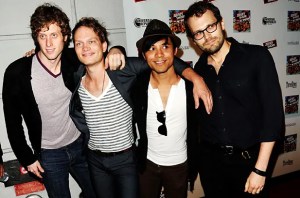
For relatively new artists on the scene like Brooklyn-based Atomic Tom, sometimes it only takes a single masterpiece to catapult into superstardom. That may not have happened for the masses with Atomic Tom, who currently only maintain just under 14,000 monthly listeners on Spotify and haven’t released an album since 2015, but for me, they have been made men ever since I heard “Someone to Love,” their biggest hit to date and a seminal triumph of dichotomy that mixes sparkling guitars and top-of-the-mountain optimism with chillingly dark, lonely and desperate lyrics that you’d be forgiven for missing the first couple times around amid the song’s overall poppy tone. This approach to songwriting, particularly in the Pop sphere, is easily my favorite and few songs, and artists, have ever done it better.
76. Ryan Adams
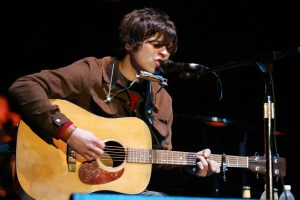
Shooting to prominence immediately upon release of his celebrated 2000 release Heartbreaker, Ryan Adams has gone on to be perhaps the most active singer-songwriter of the generation releasing no less than 26 more original studio albums since then in addition to four cover LPs including his highly publicized (and celebrated) cover of Taylor Swift’s 1989 in 2015. But even that isn’t fully covering his output or even some of his best work as captured live in the phenomenal double LP Live at Carnegie Hall, 2023’s Return to Carnegie Hall, and 2024’s Prisoners. In 2024 alone, the man released no less than 5 LPs, and would you believe it if I told you every single one of them was good? The pace of Adams’ output (not to mention some questionable personal decisions) have threatened to blunt the impact of the quality of his body of work, but to overlook it would be a grave mistake.
75. Swearin’
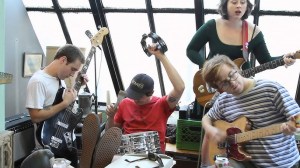
It’s been over half a decade since Philadelphia-based Indie Rockers Swearin’ released their last album, 2018’s Fall into the Sun, but I’ve never stopped thinking about the LP’s magnum opus “Grow into a Ghost,” a supercharged 3-minute Garage Punk anthem that somehow manages to find grooviness and inspiration in the mirror of a fading relationship. The title alone is so evocative it’s one of those one-in-a-million ideas that you can’t believe nobody came up with sooner. But the album, and band, is no one-trick pony; songs like “Big Change” may not be as rollicking or universally relatable, but they’re every bit as interesting, well-built, and irresistible. Whether Swearin’ is truly done or if we have more great music to look forward to, we’ll always have what they’ve already created and that never fails to make me smile.
74. The Velvet Underground
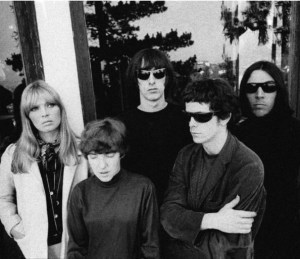
I’ve heard it said that while The Velvet Underground didn’t sell a lot of records during their 9-year run from 1964 – 1973, everyone that heard them went out and started their own band making their influence on the musical landscape of the ’60s, ’70s and beyond higher than many of the more well-known acts. Indeed, nearly 60 years since the release of their legendary debut alongside German singer Nico, the band maintains nearly 3 million monthly listeners on Spotify and frontman Lou Reed in particular remains a household name years after his death. The band had a shockingly qualitative output during their near-decade run, too; while The Velvet Underground and Nico is certainly (and rightly) given the most credit as their magnum opus, their 1969 self-titled release, while tamer, is almost as good. There’s no question that The Velvet Underground is something of an acquired taste, but it’s one that is so intoxicating that when you develop it, it becomes intoxicatingly unforgettable.
73. Sharon Van Etten

Like many, I remember my introduction to Jersey’s own Sharon Van Etten to be the laid back, meandering, and, frankly, delightfully disrespectful “Every Time the Sun Comes Up,” the unforgettable closer to her 2014 album Are We There. While Van Etten had been on the scene for five years by that point, it wouldn’t be for another five that she would reach her true potential with the fantastic Remind Me Tomorrow and its haunted, anthemic mid-album showstopper “Seventeen,” perhaps the greatest song ever inspired by New York City (which is saying something) and easily one of the greatest releases of the last decade. That release seemed to revitalize an artist now operating at the top of her game; she didn’t release a single album between 2014 and 2019. She has since released three more during the ’20s including, most recently, her 2025 self-titled release alongside The Attachment Theory.
72. Robyn
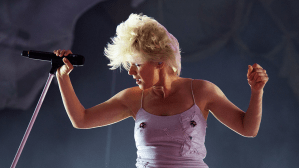
2010 was a huge year for music for me, maybe the biggest of my life. It was the first full year where I had access to an iPod, iTunes and Rolling Stone magazine and, as a result, it was the year where my musical horizons exploded. It was also the start of a new decade, which is always a great place to start, and still one of the greatest years of creativity from many of the top artists of the age. While pop stars like Lady Gaga, Taylor Swift and Katy Perry were on top of their games at the time, those who were exposed to Robyn’s Body Talk immediately recognized that none of them were releasing anything on the level of THE lovestruck dance anthem of all time, “Dancing on My Own.” 10 years later, Rolling Stone would go on to rank it as the greatest song of the decade and, while it might not top my own list, it’s easily a contender and, without question, among the greatest dance-pop songs ever released at the height of electronica’s influence on the genre and public conscious.
71. Free Cake for Every Creature

My wife often jokes about my love for “random lesbian music,” and while she’s not wrong and there’s no shortage of it in my regular music rotation, there’s no question the project she’s typically thinking about when she says that is Katie Bennett’s Free Cake for Every Creature. While the project had a short-lived run from 2014 to 2018 before being discontinued by Bennett “on a high note” after the release of the truly incredible The Bluest Star, the legacy it has left in the Burnes household at the very least is epic. The Bluest Star in particular is a fascinating listen with apparently multiple songs taking similar ideas in different directions. Compare the “hip-to-hip” magic of “Around You” with “Tom or Mike or Pat or,” or the beautifully understated “Shake it Out” with the even more melancholy “Took a Walk,” and I think you’ll see what I mean. But rather than sounding repetitive, it feels more like an examination of some of the catchiest hooks and down-to-earth songwriting of the generation.
70. Don Henley
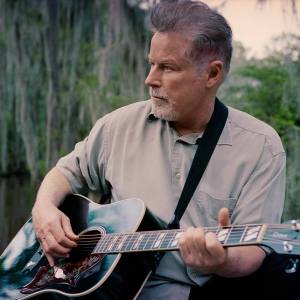
Noted Collaborators: The Eagles
It’s really impossible to understate the the stranglehold The Eagles held on the American musical mindshare during their run in the 1970s with 200 million records sold, multiple top 20 hit songs, and an indelible impact on the success of Country Rock that bands like Restless Heart and Rascal Flatts continued in their wake. Impressively, they remain the only band with more than one album with more than 40 million in album sales including their first greatest hits album and 1976’s Hotel California, numbers that are unheard of in this modern age of Spotify, Apple Music and YouTube. For me, though, it has really always been Don Henley’s solo work released in the wake of the band’s ’80s breakup that has stood the test of time the best. “The Heart of the Matter” from 1989’s The End of Innocence was one of the songs on that original mixed CD my dad made for me all those years ago and it still receives regular rotation in my lineup when almost everything else on that disc has fallen away with time. But even with my deep-rooted nostalgia for that specific track, I don’t think there’s any doubt the evocative “The Boys of Summer” from ’84’s Building the Perfect Beast stands as his masterwork. Hit that track during a sunset run (especially on the beach) and just try tell me it isn’t one of the greatest ever written.
69. The Who
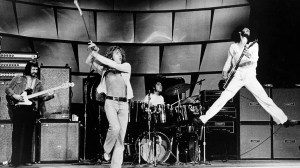
The Who is an interesting entry for this list for me. They’re one of the Rock bands I was exposed to earliest via a multiple-disc greatest hits collection my step-dad bought for my brother before I even had my first iPod. Yet, if I’m being honest, the majority of that collection didn’t do much for me. At the same time, the band has some of the greatest Rock songs ever written under their belts including, most notably, the anthemic “Baba O’Riley” that, love them or hate them, is almost objectively undeniable. It’s also impossible to deny the impact the band had on the landscape of Rock n’ Roll during the greatest Rock decade ever as a key part of the British Invasion. This is the group the popularized the Marshall stack, synthesizers, operatic elements and, arguably, even the almighty power chord itself. They may not hold up as well as some of their other peers from Rock’s golden age, but there are many undisputed factors contributing to their ongoing status as a household name for Rock fans worldwide.
68. Brett Dennen
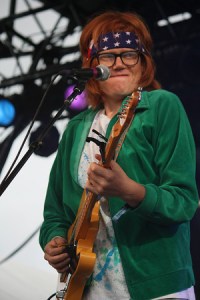
Singer-songwriter Brett Dennen is another of the relatively new arrivals in my musical repertoire after I was introduced to him when he opened for John Craigie at a concert my wife and her immediate family dragged me to in Fort Worth in 2023. While I enjoyed the set, I wasn’t completely sold until John Craigie brought him on as part of his own set for a spirited runthrough of Dennen’s greatest triumph, the joyful ode to loyalty that is “Sydney (I’ll Come Running),” which, as a side bonus, doubles as one of the all-time great running songs ever written. Since then, I have slowly introduced myself to other similarly strong pockets of his output including, most recently, 2024’s If it Takes Forever which makes for an intriguing mix of hippy sensibility, earnest sensitivity, and class-consciousness. And with eight other albums spanning all the way back to 2005, that’s just the tip of the iceberg.
67. Ashley McBryde

There’s no doubt about it, the resurgence of female-dominance of the country genre has led to a revitalization of the genre that had grown stagnant and stale after the ’90s when the now older standbys of George Strait, Toby Keith and Garth Brooks ruled the roost. If you don’t believe me, step into any Texas Roadhouse and listen to what they’re playing in there; I can virtually guarantee any of the music released in the last 10 years is by a woman. And, if you’re lucky enough, you may even hear some legitimately fantastic gems like McBryde’s towering middle finger to judgmentalism that is “American Scandal,” a choice cut from her 2018 release Girl Going Nowhere. On the contrary, with songs like that to her name and a consistent output ever since, this is a woman to watch and cherish for any fan of the genre, and maybe even for a few unwitting listeners that may be ripe for conversion.
66. The War on Drugs
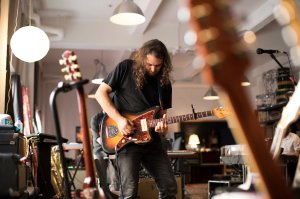
The War on Drugs is a great example of why Rock n’ Roll will never truly die, even if its time at the top of the charts is, sadly, long past. After co-founder Kurt Vile left bandleader Adam Granduciel at the reins to chase his own solo career, Granduciel was left to tinker with some of the greatest Rock songs released since the turn of the century, particularly on the band’s 2017 release A Deeper Understanding which featured such gems as the Dylan-esque “Strangest Thing” and the 7-minute driving triumph of “In Chains,” which mixes synths, guitars, and classic Phil Spector-inspired walls of sound to create something that feels truly relevant, unique, and important. And, while I haven’t had the pleasure to date, all evidence indicates they can put on one hell of a live Rock performance, as well.
65. Adam Skorupa
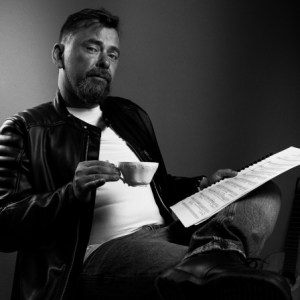
I made the argument earlier that the mark of truly great instrumental music used in TV/Film and Video Games is when you listen to them away from their mediums and still come away impressed. Adam Skorupa’s work takes it a step further; I didn’t even like The Witcher 2: Assassins of Kings and yet I still consider his work on that game to be some of the all-time great video composition ever devised. I’m always fascinated by the works of foreign artists since our typical soundscape in America is dominated by those from either the States or the U.K., and Skorupa’s Polish influence comes through loud and clear throughout the authentic Polish works of art that The Witcher series in full are. While he was replaced by CD Projekt RED’s own Marcin Przybyłowicz (who is a great composer in his own right) and has since scored lesser known titles like Ancestors Legacy, Iron Harvest and Sea of Conquest, his work on those first two Witcher titles stand out as arguably the best parts of them. Even today, when I carve out 7-and-a-half minutes to listen to the grippingly atmospheric “Dwarven Stone upon Dwarven Stone,” a track that is easily missable in The Witcher 2 itself, by the way, thanks to the branching nature of that game’s story, I still come away in awe.
64. Michael Giacchino
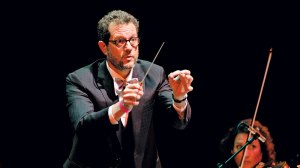
While I lauded Austin Wintory earlier for his ability to move between compositions for TV/Film and Video Games more successfully than most, perhaps nobody has done it to the degree and success of Michael Giacchino, who has scored massive projects across both mediums since the early 2000s including The Incredibles, Ratatouille, Up, Planet of the Apes, Inside Out, Rogue One, Spider-Man, The Batman and Call of Duty. While researching him for this write-up, I only just learned he also has ride credits to his name including the incredibly atmospheric music in the queue for Disney’s Space Mountain. While all of this makes for an incredible resume, his status as the first man to compose for a Star Wars film outside of the legendary John Williams sticks out the most for me, particularly considering it resulted in, for my money, the series’ greatest composition to date in “Your Father Would’ve Been Proud,” which plays during the film’s truly unforgettable climax.
63. Melandru

Melandru is the first of the artists I’ll be highlighting on this list known primarily as an arranger of work of other composers, typically the work of early video game composers with limited tools at their disposal, and modernizing them with truly classical instrumentation. While Melandru doesn’t have the discography of his peers TPR and ROZEN, when operating at his peak, he shows signs of surpassing both of them. For evidence of this, look no further than his stunning 9-minute rendition of Nobuo Uematsu’s “Those Chosen By the Planet,” from Final Fantasy VII. The title doesn’t really do justice to what Melandru created, however, because rather than a simple rendition of the iconic music that plays during many key Sephiroth scenes, the piece is actually an original medley and reworking of a litany of themes from the game including the main theme, “Aerith’s Theme,” Shinra’s Theme,” “One-Winged Angel,” “Jenova’s theme” and even some of the modern stuff like “Seven Seconds Till the End.” None of these tracks have ever been linked in this way and none of them have ever sounded better, making this, in my view, THE definitive Final Fantasy VII piece of music. That is a statement I do not make lightly.
62. ROZEN
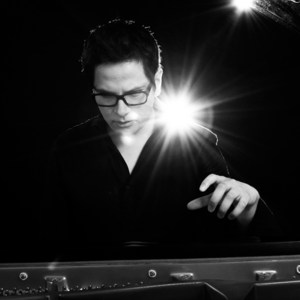
ROZEN is one of those incredible untold stories behind music-making that you don’t often hear about, but that is no less inspiring. Like many other modern composers, ROZEN started out as an arranger, largely of video game music including, most prominently, choice selections from The Legend of Zelda series. The man has no less than six Zelda-specific albums to his name, all of which are filled with truly inspired orchestrations of many of Koji Kondo and company’s classic tunes in their most compelling form. Beautifully, then, I was all the more inspired when I played through Ember Lab’s Kena: Bridge of Spirits earlier this year and learned, to my surprise, one of the game’s main composers was none other than ROZEN himself. From arranger to a now credited and award-winning composer, ROZEN is an inspiration to all who tinker with and perfect the art of arrangement and one of the great rising stars in the industry today.
61. Matthew Dennis
Matthew Dennis is not the first composer nor relative unknown on this list, but he is the first that is SO unknown that I was unable to find more than a single photograph of him to use on this list. As far as I can tell, the man also only has a single project to his name. But what a project it is; Netflix’s original documentary My Octopus Teacher is one of the most memorable and moving pieces of filmmaking I’ve ever seen and Dennis’ score is equally so. I would be loathe to spoil the developments of this film for those who haven’t seen it and would highly recommend it to literally every human being walking the Earth, but I will go ahead and let you know it is a tearjerker thanks in no small part to Dennis’ atmospheric, piano-laden score. You don’t have to have seen a second of the film to feel the emotion behind “Not Just a Visitor.” But if you have, you’d be hard-pressed to make it through the composition’s three-minute length without shedding a tear.
60. Alvvays
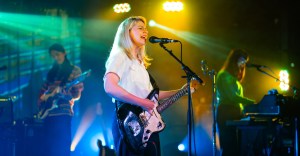
While I think I’ve done a good job of including a mix of classic and modern artists on this list, perhaps no post-2010 band has stuck with me over the last decade like Alvvays has. I was an immediate fan of their dreamy 2014 self-titled debut, which I still consider one of the greatest records I’ve ever heard and certainly the my favorite debut album of the 21st century. It is a lean, 9-song whirlwind of whimsy and earnestness full of wall-of-sound-infused Surf Rock led by Molly Rankin’s melancholy trill. Their 2017 follow-up Antisocialites was no slouch either; even if the peaks and consistency don’t reach quite as high and far as their, frankly, untoppable original, it is similarly filled from front-to-back with lovely, and often bitingly humorous, tales of love, loss, desire, apathy and depression. There may not be any record released that decade that filled me with as much excitement as that one did; the night my brother and I discovered the lead single “In Undertow” was out on Spotify is one I won’t forget anytime soon. While the band’s third (and currently final) LP, 2022’s Blue Rev, didn’t hit quite as hard for me, with two modern classics to their name, Alvvays remains firmly entrenched in my musical rotation and favor as one of my favorite bands still on the scene today.
59. Banner Pilot
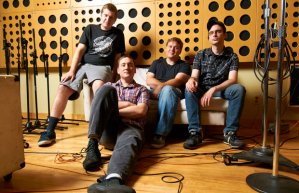
Ever since my early exposure to bands like Ramones and The Clash, I’ve always really enjoyed the flippant, joyful nature of Punk Rock. But while various groups, including some highlighted earlier on this very list, have utilized the genre’s best attributes, I don’t feel any group has perfected it like Minnesota-based Banner Pilot. Depending on how loosely you define the genre, which is admittedly nebulous at the fringes, I consider the group’s 2009 release Collapser to be the greatest pure Punk album ever released, which is notable considering its late ’00s release long after the genre had hit its popularity peak. Not only does the album not have a bad song, it lacks a song that I wouldn’t consider exemplary other than perhaps the fairly forgettable “Empty Lot.” While a lot of that is attributable the band’s impeccable rhythm section combined with singer Nick Johnson’s evocative midnight howl, it’s actually his approach to surprisingly earnest lyricism that strikes me most. The fact that it’s so easily missable under the band’s otherwise sneering sheen makes it all the more special. Emblematic of many of the truly great Punk bands that have come onto the scene with little fanfare, Banner Pilot released their first album in 2006 and haven’t released a thing since 2014’s Souvenir, leaving in their wake a 5-album run that came and went with nary a hint of fame. Truly then, they are representative of the genre at its best, a well-kept secret cherished and celebrated by the few who have been lucky enough to discover them.
58. Metallica
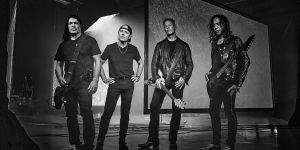
I don’t think it’s an understatement that most boys that have grown up in the US since the 1980s have, at some point in their lives, had a Metallica phase. For my brother and I, it hit around the release of the band’s awesome 2008 comeback album Death Magnetic. My step-dad was more-than-happy to encourage this newfound appreciation for Metallica’s approachable brand of thrash metal, burning us copies of …And Justice for All and the black album. My mom was less enthusiastic when she got a hold of our physical copy of Death Magnetic and the, to her, alarming imagery and lyrics contained within. As a result, Metallica was the only band we ever got into that she attempted to ban. It didn’t work. While I later “grew out of” Metallica and found myself listening to them less and less over the years, my work on my Top 500 Greatest Songs list re-instilled a newfound appreciation for the band and their greatest works like Master of Puppets and Ride the Lightning. My brother, meanwhile, remains an afficianado for their earliest LP Kill ’em All and can often be found sporting a shirt with the album’s cover art. While I never fully latched on to Metallica’s peers of the day like Pantera, Anthrax and, most notably, Megadeth, Metallica’s blend of lyricism, thrash and straight up catchiness remains irresistible to this day.
57. Ashley Monroe

Noted Collaborators: The Pistol Annies
While I grew up with something of an aversion to Country music thanks to my overexposure to it at the hands of my father during my earlier years, Ashley Monroe (after Taylor Swift) was a big part of breaking down the barriers I had with the genre and helping me realize that, if you dig deep enough, just about any genre has something to offer. Her 2013 release Like a Rose and 2015 follow-up The Blade were also big albums for me during my days of reviewing albums regularly during my college years at The East Texan with my review for the former actually being part of my job application to the publication (and, ultimately, my first job). While I’ll probably always have a personal fondness for Monroe for that reason, it’s actually her work alongside Miranda Lambert and Angaleena Presley as the Pistol Annies that has stood the test of time as my favorite. “Best Years of My Life” from 2018’s excellent Interstate Gospel may just be the final boss of heartache country.
56. Junichi Masuda and Go Ichinose
Noted Collaborator: Morikazu Aoki
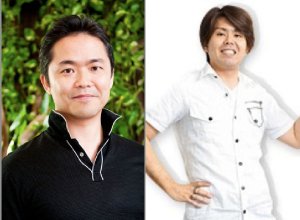
If you have ever played a Pokemon game, you owe a great debt to Junichi Masuda and Go Ichinose. Masuda has been with the series since the beginning serving as both programmer, sound director and composer for the original titles and has been credited on every mainline title released since. Go Ichinose joined as a composer starting with Pokemon Pinball back in 1999 and continued to work with Masuda and a litany of other Pokemon composers on every mainline release starting with Gold and Silver. Both men are responsible for certainly some of the most nostalgic tunes to ever grace this pair of ears and, no doubt, hundreds of millions of others. The Gold and Silver soundtracks in particular stand out as a huge accomplishment considering the limitations of the Game Boy and the quality and raw emotionality of the resulting pieces that blanketed that title. And while the original releases of some of those older titles may fail to hold up for those that weren’t raised on the Game Boy’s iconic chiptune, there is no shortage of incredible arrangers and artists, including, perhaps most notably, Dr. Pez and TPR, who have devoted countless hours to properly orchestrating them with full instrumentation.
55. Gary Clark Jr.
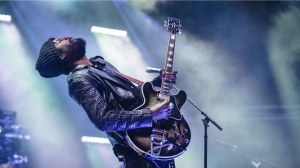
Unless you knew him before the release of his first EP titled The Bright Lights in 2011, it would be literally impossible for you to be an earlier adopter to Gary Clark Jr. and his truly impressively diverse approach to preserving the Blues than I was. I remember listening to those four songs, which included two incredible plugged in, all-out bangers in “Bright Lights” and “Don’t Owe You a Thang” and two gorgeous, acoustic and, most impressively, live recordings of “Things Are Changin'” and “When My Train Pulls In” and just being absolutely blown away. At the time, I didn’t think I’d ever heard better guitar gymnastics coupled with raw soul and evocative emotion in my life. Quite frankly, I’m still not sure I have. While 2012’s Blak and Blu was his first major label release, it was his live double LP follow-up in 2014 that continues to stand tall as my favorite of his releases since. The haunted graveyard stomp of “Numb” is just undeniably cool and I still don’t know if I’ve ever heard a better singular guitar solo than the nearly three-minute stunner Clark unleashes on “Please Come Home.” Speaking of “Please Come Home,” Clark’s Marvin Gaye-esque vocal register is nothing to sneeze at, either, which is what some of his more modern releases like last year’s JPEG RAW have focused on to the detriment of his guitar work. Still, I appreciate his commitment to evolution and, even when his newest stuff doesn’t hit quite at the level of his more Blues-heavy work from a decade ago, that unbelievable 10-minute combination of “Third Stone from the Sun” and “If You Love Me Like You Say” is always sitting there waiting to be rediscovered. That is, as long as you own a physical copy of the record.
54. The National
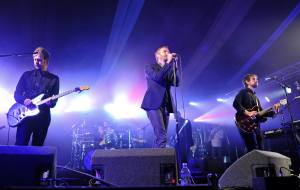
I may not have been quite as early an adopter of The National as I was for artists like Alvvays and Gary Clark Jr., but they were an early adopter of me. I’ll never forget listening to the 5-track recommended songs from the 2010 Rolling Stone magazine that featured The Black Eyed Peas on the cover, which was essentially my first exposure to new music as recommended to me by the outlet. Other songs like Jack Johnson’s “You and Your Heart” and “I Learned the Hard Way” by Sharon Jones and Dap-Kings certainly made a strong impression, but none of them hit quite like The National’s “Bloodbuzz Ohio,” featuring Matt Berninger’s iconic baritone and the record’s almost lackadaisical approach to intimacy and next-morning repercussions. While I still love that track, it’s actually the band’s 2017 release Sleep Well Beast that has stuck with me the most over the years armed with its one-two emotional gut punch of “I’ll Still Destroy You” followed by “Guilty Party.” They’re two of the all-time great examples of back-to-back sister tracks on an album, creating an unforgettable duality of pain and regret that has stuck with me unerringly for every year since.
53. Better Oblivion Community Center

On their own, Phoebe Bridgers and Conor Oberst stand out as some of the best indie Rock acts of the generation. Bridgers in particular has amassed a huge, over 11-million-monthly-listener following on the heels of releases like 2017’s Stranger in the Alps and 2020’s Punisher. But there was something magical unleashed when the two joined forces to create Better Oblivion Community Center and the 2019 LP of the same title. The lean, 10-song tracklist is a tour de force of what makes indie music great and a modern classic in every sense of the word. Infectious bops like “My City” are inescapable and brilliant, but nothing tops the 3-and-a-half minute bombshell that is “Dylan Thomas,” which just might be better than any song that has released since. The duo launched a major tour following the release of the album which wrapped in August 2019, leaving us without any activity for the last six years. They’ve since gone back to their own solo projects with no signs of reuniting. While I would be there day one to support anything the two decided to pursue if that day ever comes, there’s also something special and poetic about quietly releasing one of the greatest albums of the decade before disappearing into the ether like a fleeting, yet life-altering, summer fling.
52. Masayoshi Soken
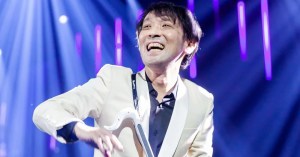
The legendary Nobuo Uematsu’s shoes have really been impossible to fill for the Final Fantasy series ever since his departure following his composition of Final Fantasy X’s unforgettable “To Zanarkand,” leading Square Enix to rely on a litany of other composers to try to fill that void. While many of those composers are responsible for some of the greatest music of the last two decades as evidenced by their placements on this list, perhaps no single man has managed to fill as much of that post-Uematsu void as Masayoshi Soken, the lead composer of the massive and apparently never-ending Final Fantasy XIV and, most recently, Final Fantasy XVI. His work on Final Fantasy XVI in particular has been particularly acclaimed, winning him that year’s Game Award for best composer in what many viewed as the slam dunk choice. While I would personally argue Octopath Traveler II‘s Yasunori Nishiki got snubbed (more on that later), that’s no slight on the absolutely incredible 181-song epic that is the Final Fantasy XVI soundtrack. While there are any number of compositions from the work that stick out as truly fantastic, including the string-laden “Lovely, Dark and Deep” and the borderline unhinged “Titan Lost,” perhaps nothing stands out as much as the operatic “Away,” which is put front-and-center during the game’s opening sequence featuring the fated and fiery battle between Phoenix and Ifrit. It’s an unforgettable moment for the series taken over the top by Soken’s emotional and driving score, but I don’t know if I fully appreciated just how fantastic it is until taking the time to listen to it away from the game itself. Soken has been quoted as saying he often asks himself “What would Nobuo Uematsu do” when composing for the series. While that is no doubt flattering to the master composer, I can tell you if Uematsu himself had penned “Away,” it would still rank highly among his greatest pieces of work to date.
51. Aerosmith
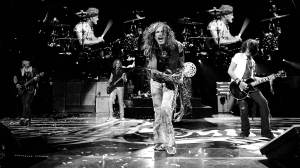
Perhaps no band is more important in defining my musical taste and humble beginnings as an enthusiast than Aerosmith. This was, officially, my first favorite band, the foundation upon which everything else has been built. My entry point was actually some of the more contemporary works from this legendary band led by, surprisingly, their 2002 single “Girls of Summer,” which has since become so obsolete I can’t even find it on Spotify. That was the track that led off the mixed CD my dad made me for me all those fateful years ago that served as my gateway into music fandom, though it wasn’t alone; other notable releases from the band’s back catalog were also featured including hits like “Dream On” and “I Don’t Want to Miss a Thing,” alongside deeper cuts like “Road Runner” and “Never Loved a Girl” from the band’s 2004 LP of blues covers Honkin’ on Bobo (apparently, my dad was a big fan). From there it was on to O Yeah! Ultimate Aerosmith Hits, a truly fantastic 30-song collection of Aerosmith cuts from over the course of their 30-year history up to that point. Now, of course, I have listened to their full collection of studio LPs, warts and all, from the drug-fueled ’70s heyday, to the drug-fueled late-’70s crash and burn, to the rise again and ultimate commercial peak of their output from the late ’80s and early ’90s, to all the weird stuff they put out after that. While the discography is certainly uneven, it’s hard to argue it isn’t the stuff legends are made of, particularly that first run of four albums from the fantastic self-titled debut through the remarkably consistent Rocks. You shouldn’t stop there, though, as many of the band’s greatest works can be found on their late ’80s comeback albums Permanent Vacation and Pump, both of which stand comfortably alongside their ’70s output. While they never hit that stride again afterward, even later albums like Just Push Play and Music from Another Dimension are varied and fascinating with plenty of good to great songs to their names.
50. Madonna
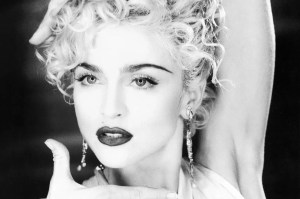
If having two under-the-radar composers rubbing shoulders with one of the biggest Pop stars in the history of the US musical scene isn’t emblematic enough of the variety of this list and eclecticism of my musical taste, I don’t know what is. But the game was rigged from the start in terms of my appreciation of her work as one of the few artists I was exposed to at a young age that wasn’t either a ’90s Country star or a renowned Christian band of the early 2000s. On rare occasions, though, when my mom would take an evening trip to the grocery store or be otherwise indisposed for a period of time, my step-dad would bring out the good stuff whether on a trip to the movie theater or just a simple jaunt to our local Lea’s Restaurant. While the excellent Confessions on a Dance Floor was his album of choice, over the years it’s her much maligned precursor American Life that has stuck with me the most. I haven’t met many other fans of songs like “American Life” and “Hollywood” over the years, and, frankly, I can understand some of the criticisms of Madonna’s ability as a lyricist. But as a total package, few Pop acts have ever hit as big and consistently as she has, horrible plastic surgery be damned.
49. Tsukasa Saitoh
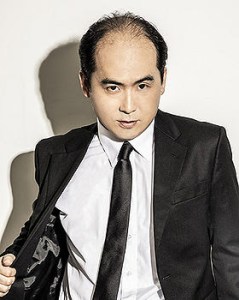
If composers like Austin Wintory are underappreciated even as one of the most prolific composers in our world today, then Tsukasa Saitoh runs the risk of being overlooked entirely. But if you’ve been exposed to any of From Software’s works of the last decade, particularly Bloodborne, Dark Souls III and Sekiro, then you know the importance this man’s work has on those experiences. Luckily, you don’t have to brave the horrors of Yharnam to take away the brilliance from haunted recordings like “The First Hunter” or “Laurence, the First Vicar,” which would stand out as Gothic masterpieces in any age.
48. Dr. Pez
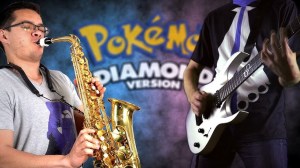
It would be easy to overlook the incredible music written for the Pokemon franchise over the years given its reputation as a soulless corporate machine dedicated to the art of separating parents from their hard-earned money for at least two generations. Luckily, we here at The Soundtrack Online are not in danger of making such a grave mistake with the childhood-defining duo of Junichi Masuda and Go Ichinose given their appropriately high dues on this list already. But we would be remiss to stop there when the incredible work of Dr. Pez is free for all to consume on YouTube as a beacon of fantastic childhood memories and impressive musicianship. Much of the good doctor’s channel is dedicated to multi-instrumental Prog-based covers of great video game music, but none stand as tall as the unbelievable EP-length masterworks he has created alongside a host of collaborators for the music of Pokemon Ruby and Sapphire and Diamond and Pearl. Both are true works of art that somehow make coherent, and musically impressive, renditions of some of the greatest compositions from both titles all recorded with live instruments and musicians from a wide variety of styles and backgrounds. The result is the definitive versions of already beloved compositions and an audio/visual experience no Pokemon fan should miss.
47. Jeremy Soule
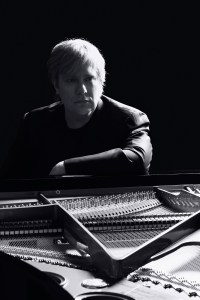
Soule’s work was burned into the brains of millions of gamers worldwide during the early 2010s during their many Skyrim adventures. In fact, for many millions, his work continues to accompany their adventures in Skyrim to this day, so prolific and long-tailed is that, one of the greatest and most replayable games ever created. But while that will forever be what he’s most known for, Soule’s goes all the way back to the mid-’90s when he worked as a sound tester on the legendary Final Fantasy VI before moving on to fully score Secret of Evermore the next year. This kicked off a prolific career that included the likes of Icewind Dale, Baldur’s Gate: Dark Alliance, Harry Potter and the Sorcerer’s Stone, The Elder Scrolls: Morrowind and Oblivion, Neverwinter Nights, SOCOM, Star Wars: Knights of the Old Republic, Company of Heroes, Prey, Metal Gear Solid: Peace Walker, and World of Warcraft, among countless others. There’s no telling how many more classic scores he would have penned in the last decade had his work continued. Unfortunately, however, he was wrapped up in several sexual misconduct scandals in the late 2010s including allegations of rape and has scarcely been heard from since, leaving behind a legendary legacy that, like so many others, is threatened to be marred by controversy.
46. Justin E. Bell

Obsidan’s Justin E. Bell is definitely the composer with the least music to his name on this list, but the soundtrack that he created for The Outer Worlds in 2019 is so shockingly good that I can’t help but give him a spot of prestige. While the game itself is a solid effort from Obsidian, a studio mostly known for developing sequels to superior games from superior studios (see Star Wars: Knights of the Old Republic II and Fallout: New Vegas), The Outer Worlds was a wholly original effort that, while not a titan in the open-world RPG genre, hit at a time when people were hungry for something in the more traditional Fallout mold after Fallout 76‘s disastrous launch and with Bethesda’s own Starfield still many years away. I enjoyed The Outer Worlds when I first played it and it has grown somewhat in my opinion over time, but the one aspect of the game that absolutely floored me both in 2019 and today is Justin E. Bell’s score. The clear John Williams influence in the OST’s main theme, which goes for an impressive 8-minutes of soaring space opera triumph is appreciated, but I’m also struck by the more understated tones of tracks like “Journey’s End.” Frankly, Bell’s work is so good it threatens to overshadow the main Outer Worlds product and I was sorely disappointed to learn that, thanks to his departure from Obsidian, his work doesn’t grace the presence of The Outer Worlds 2.
45. Brandi Carlile

Over the last two decades, few artists have managed to build up such an incredible resume with relatively little fanfare as Brandi Carlile. The woman has seven full-length, acclaimed albums to her name over the course of that time, a litany of awards across multiple academies including the Grammys and Emmys and multiple offshoots and side projects including those alongside The Highwomen, Tanya Tucker and, most recently, Elton John. But, for me, it’s her solo work that rings the truest and most impressive, particularly with 2018’s By the Way, I Forgive You, a true tour de force of varied hard-hitters, styles, and instrumentations backed by her haunted, yet approachable, yelp. For a total package, from songwriting to performance to output to creativity, it’s hard to find much better.
44. Wilco

If you grew up (or at least came into your own as an Indie music fan) during the 2000s and 2010s, it’s likely that Wilco impacted you in some way. Undoubtedly their greatest claim to fame is their renowned 2002 magnum opus Yankee Hotel Foxtrot, an album that was immortalized forever after it led to their label Reprise Records dropping them and, incredibly, giving them the rights to the record for free making it an early legend beckoning in the streaming age. Even when cutting through all of the storytelling behind the album, it stands out as one of the greatest of the era, filled to the brim with some of the greatest songs ever written including “Poor Places,” “Pot Kettle Black,” “Ashes of American Flags,” and “Kamera.” The group was no one-trick pony either, with a number of acclaimed albums to their name since including Sky Blue Sky, The Whole Love and the questionably (and hilariously) named Star Wars. While all of them are fantastic, I think my singular favorite moment belongs to “Impossible Germany” and guitarist Nels Cline’s impossibly excellent guitar solo that soars as a greatest of all time contender.
43. Ben Howard

I think millennial, British singer-songwriter Ben Howard is always going to be a special one for me given my personal experience with his introduction into my musical repertoire. I met my wife virtually for the first time on Valentine’s Day 2021 just as Texas was getting hit by the massive and deadly winter storm Uri that iced our streets (and electric grid) for an entire week. As a result, despite an instant and palpable connection, we were unable to meet each other in person for an entire week. One of the ways we bided our time was by sending each other some of our favorite albums each day. The first one she sent me was Ben Howard’s 2011 debut Every Kingdom which, at the time (and potentially even still today) she considered her favorite album of all time. While I can’t say the same on the whole, the album’s peaks like the hauntingly beautiful “Promise,” and the even more haunted death rattle of “Black Flies,” easily stand among the greatest songs I’ve ever heard. When we finally did meet, one of the first things we did together on an early date was watch Howard’s live stream performance from Goonhilly Satellite Earth Station to promote the release of his new album Collections from the Whiteout, which made for an ethereal, almost out-of-body experience that I still remember vividly. Collections might be even more consistently great than Every Kingdom for my money, an impressive feat for a 16-song, hour-plus LP, even if it lacks the same high points. That hasn’t stopped the oddly infectious earworm that is “Far Out” from being lodged in my brain ever since.
42. Rage Against the Machine
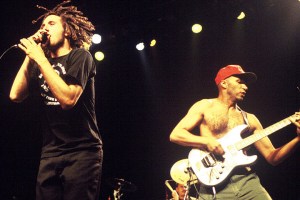
While they hit harder than just about any band can once you buy in, I recognize Rage Against the Machine can be something of an acquired taste. Like many of my generation, I was introduced to them through Tom Morello’s involvement in Guitar Hero III back on the PS2 and to say I wasn’t a massive fan of his style or the song included in the game, “Bulls on Parade,” would be safe. My re-examination of the band didn’t really start until years later when Tom Morello had his stint with Bruce Springsteen’s E Street Band in the early 2010s (particularly on the 2014 release of High Hopes) followed by frontman Zack de la Rocha’s cameo on Run the Jewels’ legendary second album that same year. Finally, I went back and listened to Rage Against the Machine’s self-titled debut in full and was blown away. While these disparate elements like de la Rocha’s righteous flow and Morello’s unhinged approach to guitar theatrics can work outside of that element, when they are coupled with the group’s truly unbelievable rhythm section with Tom Commerford on bass and Brad Wilk on drums, they become greater than the sum of their parts. Perhaps no recording better illustrates this than “Take the Power Back,” which features a driving bass riff from Wilk that bolsters Morello’s mid-song riffing and de la Rocha’s anti-capitalist yelp straight into the stratosphere.
41. Grace Park

Noted Collaborators: The Deer
Like Brett Dennen, Grace Park was an artist that I was lucky enough to be exposed to as an opening act for John Craigie (more on him later) with my wife and her family. My live experience with her was particularly special, though, as my cousin Brett was along for the ride and delivered one of the most immediately impressed reactions I’ve ever had the pleasure to witness to a new artist, which will likely live with me for the rest of my life. Brett’s one of those people with whom you can clearly tell when they’re not interested in something, but as soon as Park stepped on that stage and started playing that piano, he was locked in for the entire performance with, at times, his jaw on the floor. He was so starstruck by this relatively unknown artist that I had to convince him to ask her about one of the songs she played, “Eye of the Needle,” which we probably never would’ve found otherwise since it was a one-off from an album she did with the since deceased Sixo. While that performance stuck with me over the last couple of years, it wasn’t until late 2025 that I decided to really dive in and listen through The Deer’s four major LPs On the Essence of the Indomintable Spirit, Tempest and Rapture, Do No Harm, The Beautiful Undead. There’s not a single one I would classify below great and a couple, particularly Tempest and Rapture, climb up the ranks of the best albums released over the last decade. Each album has its own standouts, though I have to agree with the Spotify “masses” that the incredibly catchy “Confetti to the Hurricane” from Do No Harm stands the tallest followed by the dual acoustic dreaminess of On the Essence of the Indomintable Spirit‘s “Farther” and Tempest and Rapture‘s “Reflections on Moonstone Beach.” Generally, the band’s most recent release The Beautiful Undead is my least-favorite thanks to its slight dumbing-down of Park’s previous lyricism in favor of easier-listening hit-chasers, but don’t sleep on “Bellwether.” If there’s anything that can be said for sure about The Deer, they know how to kick off an album with a bang.
40. Kan R. Gao
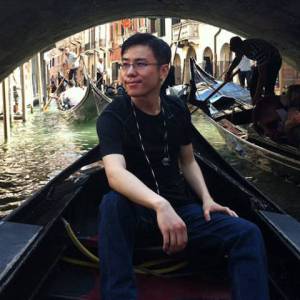
While he may not top out the list strictly as a musical artist, I consider Kan Gao to be without question one of the top 10 most talented individuals on this list. He is the single-handed creator of one of my favorite video games, stories and pieces of art in history, 2011’s indie tearjerker To the Moon. In addition to writing, creating and laying out the entire game himself, Gao also served as the game’s sole composer wherein he created some of the most touching and beautiful piano-led music I’ve ever heard. And, incredibly, he didn’t stop there, going on to create two other main games in his newfound series, including two other full soundtracks, again all on his own. The greatness of his musical work on To the Moon can largely be condensed down into two fantastic tracks, “To the Moon – Piano (Ending Version)” and “To the Moon Medley” on the game’s OST as they combine all of his main ideas into two phenomenal, heartfelt packages. Regardless of the medium, I can’t imagine a life that wouldn’t be positively impacted by his work.
39. Yoko Shimomura
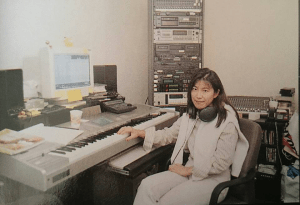
If Nobuo Uematsu was the composer that defined the end of the 20th century, it can certainly be argued that Yoko Shimomura is the composer of the 21st so far. With a legendary body of work stretching back to the ’90s including Street Fighter II, Breath of Fire, Live a Live, Front Mission, Super Mario RPG, Parasite Eve, Legend of Mana, Kingdom Hearts, Mario and Luigi, Radiant Historia, Final Fantasy XV, Streets of Rage 4, Mario+Rabbids: Sparks of Hope and now coming full circle to arrive back at Street Fighter VI, the argument could even be made that she has become the most prolific video game composer in the world. While I think it’s safe to say her work on the Kingdom Hearts series, including credits on every entry to date, has become her greatest critical and commercial success, and with good reason considering many of the iconic pieces of music that accompanies that series, for me, it’s her work on Final Fantasy XV, one of the most underrated video games I’ve ever played in a variety of categories including Shimomura’s heartfelt score. Regardless of the context, though, the genuine emotion that she is able to evoke out of her melodies is her greatest calling card and no doubt the greatest contributor to her legendary run and ongoing success.
38. deadmau5

Noted Collaborators: Chris James
I know that deadmau5 will probably stand as one of the biggest obstacles for some, particularly among the older crowd, to listen through each entry of this list’s catalogue and find a comfortable home. But for those of us that were there for his late-’00s to early-’10s heyday, his status is nothing short of legendary. This was the time when EDM and House music was spilling out of the clubs and dance floors and finding its way into the mainstream with DJs like Lady Gaga and Skrillex becoming Pop stars almost overnight while other more established hitmakers like Usher and Britney Spears transitioned to a new synth-based sound on the heels of a throng of electronica-infused hits. While deadmau5 may not have reached the commercial heights of some of his colleagues during that time, for those that were plugged into the space, he hit a particular high that, in some ways, went unmatched. Look at the output of killers this man put out in the span of a half a decade from the cool, hypnotic tones of “Strobe” to the in-your-face bash of “Ghosts ‘n’ Stuff” to the the incredible build and release of “Right this Second” to the meloncholic synths of “There Might Be Coffee.” The amount of emotion and variety produced with such a limited palate is stunning, and wrapped in it all is deadmau5’s evocative, borderline trademark-infringing look that became a symbol of the genre as a whole. For these reasons and more, deadmau5 is not only my favorite EDM act, he is one of my favorite music artists of all time.
37. Ramin Djawadi
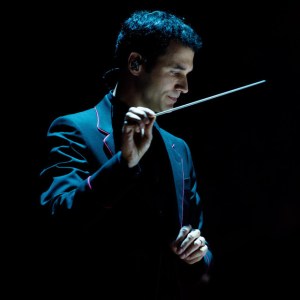
While Irish-German composer Ramin Djawadi was already making a name for himself in the late 2000s scoring through his work on the original Iron Man film, Clash of the Titans and even the 2010 release of the video game Medal of Honor, he became immortalized forever in the annals of music history when he got the job to score the legendary Game of Thrones series, to which he devoted the next decade of his life. Obviously the Game of Thrones theme itself is one for the ages, but, as a huge fan of the series and the art of great composition, I have always appreciated Djawadi’s penchant for writing both emotional and easily recognizable themes that are capable of subconsciously tipping the audience off toward what’s coming including, most legendarily, in the lead up to the infamous Red Wedding. His skills in this area are so strong, in fact, that he was tasked with writing a completely new piece of music without taking any of his previous themes into account for Cersei Lannister’s infamous burning of the Sept of Baelor in Season 6, and the resulting gothic masterpiece was so brilliant it was used as the character’s theme for the remainder of the show. Without question, this is Djawadi’s single greatest masterwork, as it brilliantly builds the tension to the show’s greatest climax, but the composer nearly matched it again two seasons later for the final stand against the dreaded Night King in “The Long Night.” But even after Game of Thrones‘ infamous ending and its resulting fall in the public eye, one would be remiss to overlook the brilliant music that Djawadi continues to produce for the ongoing House of the Dragon Game of Thrones prequel series. Whether you have seen the new show or not (and I highly recommend that you do), take a quick listen to “Funeral by the Sea” and tell me if you think Djawadi has lost a step from his mid-2010s peak.
36. Fleetwood Mac
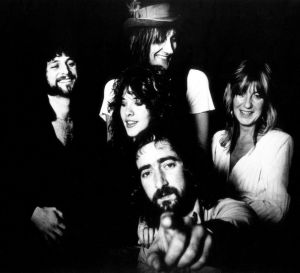
The story of Fleetwood Mac is one of the most storied and complicated in music history to the point where “List of Fleetwood Mac members” is its own Wikipedia page on top of the basic band page. Originally formed in 1967 by Peter Green, the only common clause between this pretty hardcore Blues band and the legendary ’70s lineup featuring Stevie Knicks, Christine McVie and company is drummer Mick Fleetwood and bassist John McVie. Unsurprisingly, it is this version of the band, which featured one of the greatest runs of albums of the mid-to-late ’70s with the triplicate brilliance of 1975’s Fleetwood Mac, 1977’s Rumours and 1979’s Tusk that earned them a spot on this list and their status as one of the greatest bands of all time in the eyes of many. While Rumours in particular has, understandably, stuck out in the eyes of most as their masterwork as one of only 10 albums ever released with more than 40 million in confirmed album sales, the double LP follow-up Tusk definitely gives it a run for its money with slow burners like Knicks’ “Beautiful Child” and Christine McVie’s gorgeously understated “Over and Over” to its name. At the same time, it’s actually Rumours outtake “Silver Springs” that stands as my favorite song in their entire catalogue. Regardless of where your favorite songs lie, though, no amount of controversy, betrayals and dramatic (and public) battles, which could probably fill multiple seasons of Game of Thrones-esque television, has managed to tarnish that output of fantastic music, serving as a stark reminder of what matters most in the world of music-making.
35. KISS
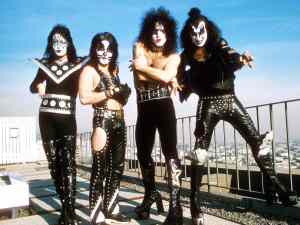
Depending on your perspective, there’s a chance that KISS’s high marks on this list stand as the greatest threat to its legitimacy and the greatest challenge to my approach. It would not be unfair to argue that more bad music can be ascribed to KISS than anyone else on this list, so long was their career with the majority of it persisting perhaps long after it should have. But this list is built off of peaks rather than a full career retrospective and if you are a fan of the ’70s heyday of Rock n’ Roll, there’s hardly denying that KISS’s run of hit records over the course of that decade is worthy of acclaim and celebration. Admittedly, even their ’70s output was uneven with records like Dressed to Kill and Rock and Roll Over filled with fantastic and mediocre tracks in equal measure. But when operating at their peak as in standouts like Destroyer‘s “Detroit Rock City” and Rock and Roll Over‘s “Mr. Speed,” you’d be hard-pressed to find a Rock group that could do it better, even in the heyday of the genre. The band also knew how to put on one hell of a show with the chops to back up their onstage personas and theatrics as immortalized through the legendary Alive! album, which helped popularize the live album as a concept and still stands as one of the best and most successful ever released. And even after they were long past their heyday, these professionals could still manage to bang out the odd standout; check out “All for the Glory” from 2009’s Sonic Boom and tell me it doesn’t sound every bit as good as their ’70s best.
34. Paul Simon
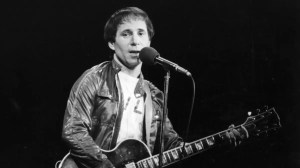
Noted collaborators: Simon and Garfunkel
Few singer-songwriters have had the tenure or run of legendary albums and songs that Paul Simon has. Starting with his elementary school friend Art Garfunkel as the brilliant duo of Simon and Garfunkel, he was bolstered to prominence on the strength of their seminal hit “The Sounds of Silence,” which would be featured prominently to an almost comedic degree in the infamous coming of age tale The Graduate. Indeed, you will still see parodies and memes of the song’s usage mirroring its use in that film to this day, often by younger fans who don’t even understand the full context. But just as their fame (and output) was hitting its critical peak with 1970’s Bridge over Troubled Water, they split and pursued their own careers. While Garfunkel himself has some great stuff to his name, there’s no question Simon was the songwriting force behind the duo’s success, which he was able to utilize to great effect as a solo artist through such fantastic recordings as his self-titled re-debut in 1972 and, most notably, alongside a host of talented African artists in 1986’s Graceland which won him no shortage of accolades. While I find Simon and Garfunkel’s work to continue to be the most standout, there is no denying the infectious energy of Graceland and its title track which nearly reaches those same great heights.
33. Catfish and the Bottlemen

Like Ben Howard before them, Catfish and the Bottlemen were another British artist introduced to me by my wife during the week leading up to our first meeting, though it’s safe to say their approaches differed greatly. While Ben Howard is an eye-darkened singer-songwriter full of depression and longing, here was a bonafide band of bad boy rockers that wouldn’t have been terribly out of place in decades past. While they have a bit of that Pop Punk edge that Reagan is really into (and that I find revolting), there was enough behind the eyes (and fingers) of frontman Van McCann and company to make me sit up and take notice and, clearly, keep coming back for more. The album she sent, the band’s debut LP The Balcony, is remarkably consistent for a new band on the scene, but, at just 37 minutes, it’s lean and mean and featuring what have become some of my favorite songs of all time. The oddly relatable and rollicking “26” is a standout for sure, but I’ll never forget sitting on the little twin bed I was using at the time and hearing that coda of “Fallout,” which instantly elevates what would have been a great song anyway into one of the best I’ve ever heard. Even now when it comes through my speakers, I have to stop what I’m doing and sing along, which I am guilty of as I write this very entry! While the band only put out a couple of other albums to their name before beginning a lengthy hiatus, they recently played their first show in years, leaving the door open to continue to build on an already brilliant legacy.
32. Hitomi Sato

While I’ve already given proper recognition to several composers linked with the Pokemon series on this list, we haven’t even discussed the greatest one: the unsung hero that is Hitomi Sato. Sato doesn’t have quite the tenure of Junichi Masuda or Go Ichinose; she joined the team as a game designer as far back as Pokemon Crystal (which, fun fact, is the first Pokemon game I can remember being advertised in real time on TV). While Junichi Masuda and Go Ichinose continued to handle composition duties for the first three entries, they enlisted the aid of Sato at the advent of the DS era with Pokemon Diamond and Pearl (i.e., games with some of the greatest soundtracks in the series). She continued to bolster that resume with a run of some of Pokemon’s best musical work in Pokemon HeartGold and SoulSilver and the Black and White games on through Pokemon Sun and Moon, which particularly and brilliantly captured that Hawaiian atmosphere so well thanks, in large part, to Sato’s efforts. Sato continues to work on the series today as a composer on the 2022 dual releases of Pokemon Legends: Arceus and Scarlet and Violet, making her work some of the rare aspects of the latter that actually performed at a reasonable rate. Listen to Dr. Pez’s Pokemon Diamond and Pearl medley or some of TPR’s arrangements in A Scroll through Johto (“Global Terminal” in particular) for a modern look at the brilliance this woman has brought to the franchise and, hopefully, will continue to bring to it for years to come.
31. Trent Reznor (Nine Inch Nails)
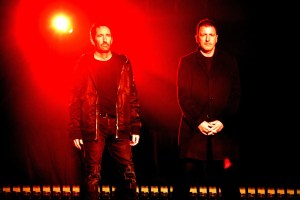
Noted Collaborator: Atticus Ross
If you haven’t checked in since Trent Reznor’s hard industrial peak in the early ’90s as frontman and all-around mastermind behind the iconic Nine Inch Nails and their seminal releases Pretty Hate Machine and The Downward Spiral, you would be forgiven for missing out on the incredible range this all-around music auteur has developed in the decades since. And that isn’t to downplay the greatness of those records; you’d be hard-pressed to find a bigger fan of the disturbed wail of “Head Like a Hole” than me. But the music that has come from this man and his now longtime collaborator Atticus Ross ever since is astounding, from a litany of great music under the Nine Inch Nails label extending well into the 21st century through releases like Hesitation Marks and Add Violence, to an equally impressive run of film scores starting with 2010’s legendary The Social Network through to Girl with the Dragon Tattoo, The Watchmen and, my favorite film of all time, Pixar’s Soul. Every single one of these releases is varied, evocative and extraordinary, and to think the mind behind those early forays into Industrial Rock is also responsible for the stirring, piano-led swirl of emotion that is Soul‘s “Epiphany,” is nothing short of remarkable.
30. Car Seat Headrest
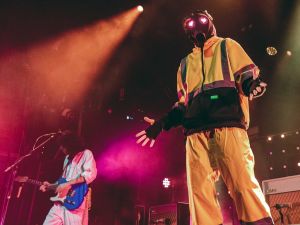
Car Seat Headrest is another Indie Rock group that I recognize may not be for everybody, but they have absolutely mastered the sort of unhinged burnout approach to Rock n’ Roll that works for me at a level few have ever matched. I was introduced to the band, which began as a solo project from frontman Will Toledo, at the turn of the century in 2010 through their fantastic 2016 release Teens of Denial which, put bluntly, includes some of the greatest music I’ve ever heard. The the jackhammering swagger of “Destroyed by Hippie Powers” is topped only by the oddly melancholic and heartfelt and yet strangely triumphant duality of “Drunk Drivers/Killer Whales.” Impressively, the group has released four more albums since then including their 2025 release The Scholars, a 9-year run during which Toledo has unveiled his instantly iconic alter ego Trait as pictured above. At the end of the day, some groups just click with you on a level that few can and, for me, Car Seat Headrest has done exactly that.
29. David Bowie
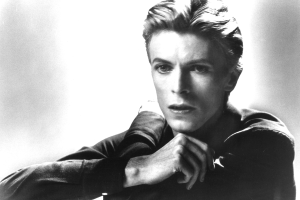
My introduction to David Bowie came from a fairly unlikely place: a playlist of his works curated by U2 frontman Bono. It was part of an early 2010s issue of Rolling Stone where they had famous artists compile playlists of their favorite songs from their favorite artists, and the first one featured was none other than U2’s frontman compiling a 15-song set for the Thin White Duke featuring such choice cuts as “Space Oddity,” “Changes,” “Starman,” “Life on Mars?” “Lady Grinning Soul” “Ashes to Ashes” and “Warszawa.” I remember being blown away by the variety on display which was on a level the likes of which I had never experienced before. And all these years later, I’m still amazed. Listening to something like The Rise and Fall of Ziggy Stardust and its impressive grandisoity vs. the enigmatic hues of Low vs. the ’80s pop sheen of Let’s Dance vs. the doomsday groove of his farewell record Blackstar is like listening to four completely different artists. I think that may contribute to why various versions of Bowie were significantly less commercially celebrated, yet it’s often these off-the-beaten-path gems like “Teenage Wildlife” from 1980’s Scary Monsters or “Sound and Vision” from Low that stand apart as his best work. Unpredictable, dramatic and constantly creative, Bowie was truly one of the artist luminaries of our age and I can’t help but thank Bono for putting together such a great collection of diverse cuts all those years ago to get my foot into the door to experiencing his greatness.
28. Velvet Revolver
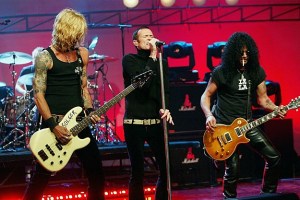
Velvet Revolver is one of the most perfectly 2000s things there ever could be, a brilliant continuation of the Hard Rock edge of Guns N’ Roses sans Axl Rose mixed with the angsty, frankly unhinged emanation of Stone Temple Pilots frontman Scott Wieland. The result is every bit as great as it sounds with Slash’s guitar theatrics and the unstoppable motor hum of bassist Duff McKagan merged with drummer Matt Sorum (who I still think beats the the shit out of his drums like nobody I’ve ever heard) behind Scott Wieland’s drug-fueled sway. Like most projects led by members of Guns N’ Roses, not a ton of material was actually released under the label (two full-length albums: 2004’s Contraband and 2007’s Libertad). But what was released was of the utmost quality, particularly in the case of Contraband which, for my money, is every bit as strong as Guns N’ Roses’ finest with straight bangers like the swaggering “Slither,” the raucous “Big Machine” and, best of all, the unhinged ode to vice that is “Superhuman,” featuring what is, to date, the greatest riff Slash has ever come up with. Velvet Revolver may not have been long-lived in real-time, with Wieland fired by 2008 and Slash and Duff ultimately reunited with Axl in Guns N’ Roses in 2015, but in my rotation, Velvet Revolver is rockin’ as hard as they ever did two decades later.
27. Muse
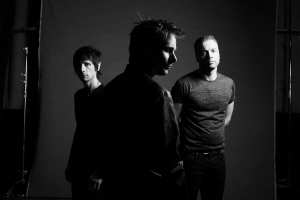
Like many other artists on this list, my introduction to Muse came at the hands of Guitar Hero and its inclusion of their, at the time, new release “Knights of Cydonia” off of the now legendary Black Holes and Revelations album as a high profile, late-game challenge in Guitar Hero III. But I didn’t truly fall in love with the band until years later as I graduated high school to the soundtrack of their 2012 electronica-infused The 2nd Law and the hypnotic pulse of passion that was “Madness.” Since then, my appreciation for the band has only grown as I’ve gone back and listened to their earlier work from their most Radiohead-inspired bouts of paranoia on Origin of Symmetry to the early 2000s angst of Absolution and the space-age hitmaking of Black Holes and Revelations. All these years later, it is that 2006 titan that holds up as their greatest triumph, particularly in the first half where they line up one of the greatest three-track runs ever recorded with “Starlight,” “Supermassive Black Hole” and “Map of the Problematique” all in a row.
26. Dave Matthews Band
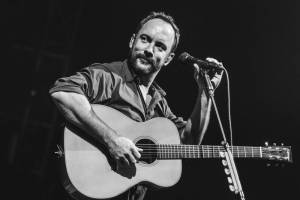
Despite being a child of the ’90s, it really wasn’t until I met my wife that I finally started to dive in and really understand the incredible creativity and musicianship of the Dave Matthews Band. Before this, I knew them for the impressively soulful and evocative “You and Me” from their 2008 release Big Whiskey and the GrooGrux King, which was a notable Grammy nominee during 2010 and thus appeared on the Grammy nominee CD I had in my early collection. This sound was so different from the unbelievably diverse, bold and, at times, unhinged direction of their 1998 LP Before These Crowded Streets, the album my wife chose to re-introduce them to me through years later, that I only recently registered that they came from the same source. While the album peters out in the second half, its first half from the animated paranoia of “The Last Stop” to the doomsday groove of “Don’t Drink the Water” to the upbeat groove of “Stay (Wasting Time)” to the violently unhinged groove of “Halloween” is an unbridled masterpiece of unpredictable brilliance that I don’t think I’ve ever heard another artist match on a single record. While I’ve since gone back and checked out their earlier (and more commercial) breakthrough Crash, I much prefer the capriciousness of its follow-up and have been so blown away by it ever since that I can’t help but put them this high on the list based on that singular run of unbalanced triumph.
25. Marilyn Manson
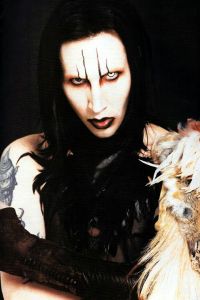
While there’s another contender a few spots up, there’s no doubt Marilyn Manson is a top contender for most controversial figure on this list. This goes all the way back to 1996 and the release of the band’s seminal release Antichrist Superstar and its corresponding Dead to the World tour, during which the Christian right claimed everything from bestiality, satanic rituals and even human sacrifice were nightly occurrences. Three years later, his music was falsely and irresponsibly credited for influencing the perpetrators of the infamous Columbine High School shooting tragedy. No doubt these exaggerated claims attributed to the band and its eponymous frontman’s status as a figurehead of youthful rebellion in the ’90s, but I’d argue it was the dangerous, influential and above all catchy Industrial Rock the band produced over the course of its trilogy of notable releases from Antichrist Superstar through Mechanical Animals and Holy Wood that added some much-needed depth to the extraneous firestorms. To this day, Holy Wood‘s “The Fight Song” may stand out as the greatest protest song I’ve ever heard with its, at the time, unbelievably bold middle finger to the Christian right with its central hook of “I’m not a slave to a God that doesn’t exist” as the high-profile and repeated CHORUS of the song. Meanwhile, Antichrist Superstar‘s truly demented yet irresistibly groovy “Mister Superstar” is truly unlike anything I’ve ever heard before or since. Unfortunately, the polemic star’s latest allegation of sexual misconduct at the hands of former flame Evan Rachel Wood appears to be the most damning and threatening to his otherwise undisputed status as one of Metal’s all-time great auteurs. But as an artist with an unabashed talent of capitalizing on controversy with a genre-defining sound and lyrical chops to back it up, Marilyn Manson stands out as one of the all-time greats.
24. Yutaka Yamada

Like Matthew Dennis, Yutaka Yamada is a relatively unknown composer that is a relative newcomer to my own musical repertoire and was introduced to me through a project a member of my family wished to share with me. He is also clearly a strong believer in the art of incredibly emotional piano composition and is responsible for some of the greatest pieces of music I have ever heard. I don’t know how highly the music for Vinland Saga ranked among the hierarchy behind my cousin Brett’s decision to introduce me to the show as my first adult anime experience, but I can promise you it wasn’t last. And while the storytelling and incredible characters of the show certainly stood out to me as part of that experience, nothing gripped me quite like the show’s incredible score did. The creators knew they were onto something magical, too, as it is not rare for everything to drop out of the show to let the music breathe and speak life into these scenes, an impressive level of restraint that makes the music hit home all the harder. Yamada is responsible for scoring a number of other projects, too, of course, including Tokyo Ghoul, Babylon, Great Pretender and, most recently, Yaiba: Samurai Legend. I can’t speak for any of these projects but I can tell you that if their music is even half as good as what’s on offer in Vinland Saga, they must be incredible indeed.
23. Bob Dylan
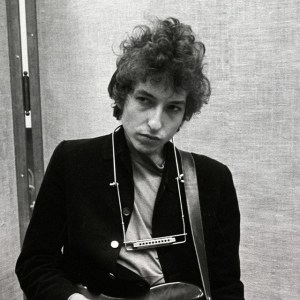
Few, if any, artists have had the impact, legacy, and sheer body of work that Bob Dylan has had over his 60+ year career. Indisputably one of the greatest songwriters to ever live, his rapid development from a world-conscious folk singer in his early albums to one of the most iconic Rock stars of the ’60s was a true revolution, and his body of work only progressed after that over the course of an incredible 40 studio albums, 21 live albums, and 17 volumes of bootlegs and other various recordings to the point where there are probably few people walking this earth that have even heard it all, to say nothing of the man who created it. And the quality-to-quantity ratio across that time is borderline unmatched, with a litany of legendary songs and albums released over the course of no less than seven decades. There was a period in my life where I would’ve put Bob Dylan at number 1 on this list, and I certainly wouldn’t bat an eye at anyone who did so. While I eventually got a bit burned out on much of his most iconic ’60s work after many, MANY repeated listens during my peak fandom during my college years, I still find myself drawn to much of his output including, particularly, his impressively evocative ’70s crown jewel Blood on the Tracks, which remains my favorite of his works and easily among the greatest albums ever made. Other standout works for me include the oft-recognized Highway 61 Revisited (led by “Like a Rolling Stone,” the song Dylan himself called his best), which was his first fully electric album that left any trace of his strictly acoustic folk roots on the cutting room floor in favor of a raucous set featuring a collection of incredibly tight studio musicians. But I’d put his 1978 soul-flavored Street-Legal, which is much more often overlooked, right there with it on the backs of standouts like “Changing of the Guards” and “Where Are You Tonight?” which find Dylan in an oddly melodic and damn near commercial mood. And you shouldn’t overlook the many modern classics he has released over the last couple of decades either, including the blood-drenched Tempest and the COVID-era comeback Rough and Rowdy Ways featuring his longest and most epic track on record, the 17-minute “Murder Most Foul,” which examines the assassination of President Kennedy and its resulting impact on the musical landscape that Dylan helped define in its wake.
22. Kanye West

Noted Collaborators: Rick Ross, Jay-Z, Nas, Really Doe
The OTHER contender for most controversial artist on this list is frankly a strong contender for most controversial public figures of my lifetime with a rap sheet of public offenses so long I could probably write my longest artist blurb here listing just those without even getting into his accomplishments as an artist. Indeed, these controversies have threatened to overshadow his legendary catalog from pretty much the beginning from his infamous “George Bush doesn’t care about black people” outburst on live TV, on through to interrupting Taylor Swift at the VMAs, to his full-blown Nazi-sympathizing turn in the 2020s. At the same time, few artists have ever walked this earth with the level of influence and straight up run of quality albums that Kanye West has, particularly during the first decade of his career which saw him release no less than seven major LPs including The College Dropout, Late Registration, Graduation, 808s and Heartbreak, My Beautiful Dark Twisted Fantasy, Watch the Throne and Yeezus, ALL of which are worthy of being considered among the most notable and greatest albums released since the turn of the century and, indeed, of all time. What was most impressive about this run was how diverse it was from the gospel-influenced soul of The College Dropout to the orchestrated majesty of Late Registration to the auto-tuned melancholy of 808s and Heartbreak, to the maximalist and progressive My Beautiful Dark Twisted Fantasy. Every album was packed to the gills with hits that were catchy, clever and often unhinged to a brilliant degree. But what I think is often forgotten about these early works in particular is just how unabashedly funny Kanye was from his detailed and hilarious retelling of his life story on “Last Call,” to his spotlight on the lunacy of societal expectations and the college experience in equal measures on “The New Workout Plan” and “School Spirit.” But even as he lost this lightheartedness in later works, his ability to stir emotion on tracks like “Roses,” “Pinocchio Story” and “Runaway,” even under all of the glitz and glamor of his impeccable production, is perhaps his greatest enduring strength. While Kanye’s musical imprint on my life as well as, I suspect, the lives of millions of others, makes it almost impossible for his antics to outweigh his contributions, no doubt they will threaten to blunt the reach of his legacy as an artist and a true pioneer of the musical landscape of the 21st century.
21. Black Sabbath
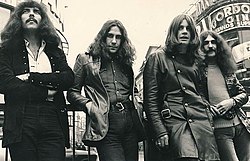
Few albums ever released are as musically influential and significant, not to mention still incredibly listenable and evidently special, as Black Sabbath’s genre-creating self-titled debut from 1970. With just five tracks (depending on how loosely you define the term), its occult iconography and heavy sound is often ranked as the single greatest influence on the Metal genre that became one of the true titans of the music industry in the ’80s. With that said, Black Sabbath’s presence and influence on the industry is undisputed, but what stands out to me is how simply great their music remains all these years later. It’s rare for the creator of a genre to stand as its greatest figure even after so many others follow and build upon their foundations, but no Metal band in history can stand up to the musicianship of Tony Iommi and his endless bag of riffs, or bassist Geezer Butler and his iconic, free-style riffing, or drummer Bill Ward and his unpredictable fills and driving, Jazz-based rhythm. Then you have the late Ozzy Osbourne who is, objectively, one of the biggest figureheads of Rock and Metal that has ever walked the land and whose approach to songwriting and paranoid lyricism is not unlike Edgar Allen Poe’s influence on the literary world. When all of these figures come together in harmony (and dissonance) on truly epic recordings like “Wasp/Behind the Wall of Sleep/Basically/N.I.B.” and the nearly 15-minute “A Bit of Finger/Sleeping Village/Warning” from that first album, the result is truly magical. But if this first album is the band’s greatest gift to the musical industry, the band’s 2013 reunion album featuring such unmitigated Metal bangers as “God is Dead?” and “Loner” is their greatest gift to longtime fans that hungered for one last run from some of music’s truest visionaries.
20. Oasis
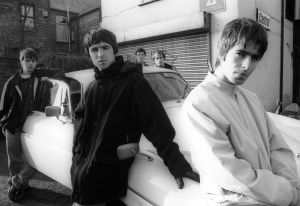
Oasis is a fascinating band for me because the public dispute between its two leads, Liam and Noel the Gallagher brothers, defined my understanding of them as the decades-long feud started just as I got my first iPod and subscription to Rolling Stone in late 2009. Like many other artists, I was introduced to them through Guitar Hero and World Tour’s inclusion of “Some Might Say” from ’95’s (What’s the Story) Morning Glory? and, while I liked it, I didn’t dive much deeper than that outside of my familiarity with their rather acidic, disparate public personas. Years later, I would get truly introduced to them much as the rest of the world did when I listened to their 1994 debut Definitely Maybe toward the end of my angst-filled collegiate years. As you can imagine, the connection was immediate and has persisted to this day; I can still think of few albums with standouts as prominent and plentiful as that album’s lineup from the opening roar of “Rock ‘n’ Roll Star” through “Cigarettes and Alcohol,” “Columbia,” ” Bring it on Down,” and, ultimately, “Slide Away.” While their later albums, particularly Morning Glory, seem to be held in higher regard these days (and I can only imagine the impact of hitting both of those classic albums back-to-back in the mid-’90s), it’s that first album that stands out the most to me to this day. To see the brothers newly reunited and embarking on a highly publicized world tour is not unlike the experience I felt a decade back when Guns N’ Roses reunited; a musical event so unlikely it seemed beyond the pale of possibility. If the result is incredible new Oasis music, unlike what we have received from Guns N’ Roses in the last 10 years, the world stands to benefit.
19. AC/DC
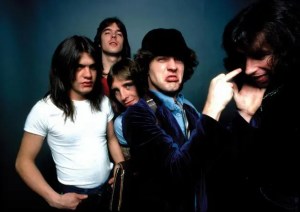
In case I haven’t made it clear up to this point, 1970s Hard Rock was truly my gateway into music appreciation. While Aerosmith dominated the fateful mixed CD my dad made me that served as my first real introduction to the genre, AC/DC’s absence was only due to his fear that they were too unpalatable for my mom’s taste than any other oversight. Make no mistake, when it was just me and him, we had “Shook Me All Night Long” and “Back in Black” blasting at the top of his speakers rolling down the highway, probably exactly as Angus Young and company intended. My first owned AC/DC record was actually their 1992 hit-infested Live album, which no doubt helped foster a love for live LPs that persists to this day. My collection quickly grew through the additions of their initial LP High Voltage and Bon Scott’s final contribution to the group, 1979’s Highway to Hell, which, at the time, would’ve ranked incredibly highly among the greatest LPs I had ever heard. While that album’s rollicking “Touch Too Much” remains my favorite singular AC/DC track, and I generally prefer Bon Scott’s higher and more unhinged vocals than replacement Brian Johnson’s, there’s no question that, track-for-track, Back in Black remains the group’s magnum opus all these years later. Somehow, even all these years later, I haven’t managed to get sick of “You Shook Me All Night Long,” even if the sheen on “Black in Black” itself has faded on me after countless listens. But even without either of them, Back in Black still reigns supreme on the heels of the rollicking “Shoot to Thrill” and the amazingly brazen “Have a Drink on Me,” released just months after Scott’s alcohol-fueled death.
18. Roger Waters
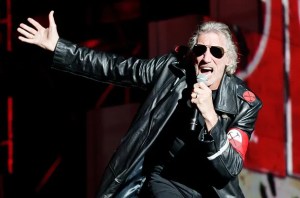
Noted Collaborator: Pink Floyd
Few Rock acts of the 1970s have enjoyed the long-lasting cultural definition of Pink Floyd, with a fandom so massive and loyal they are often ranked as the greatest of the age. With a litany of incredible musical works to their name including the legendary Dark Side of the Moon, The Wall, and Wish You Were Here, that status is not unwarranted. But the magic died for many when controversial co-founder Roger Waters left the band and, in an Axl Rose-esque move, sued the remaining members for ownership of the Pink Floyd name. While Waters ultimately lost out on the naming rights (and the David Gilmour-led version of the group continued with noted success without him), for me, Waters’ greatest musical triumph was still to come and ultimately realized in 2017 with the explicitly anti-fascist Is This the Life We Really Want?. Not only is the album as sadly relevant as ever (if not more so than it was when it first released eight years ago), it is a musical tour de force not unlike the greatest works of Pink Floyd but with an overtly political edge. Following the incredible (and openly sacreligious) opener “Deja Vu,” Waters’ unleashes Floyd-esque musicality on the alarm-raising title track and “Picture That” and the swirling anti-war protest of “Bird in a Gale.” But as dark as the album is throughout the majority of its runtime, including iconography highlighting drowning children and unprovoked drone strikes on civilians, its closing movement is surprisingly a gorgeous, goosebump-inducing ode to the beauty of love and its ability to withstand the worst the world has to offer. As a whole, the album is a masterpiece for all time, in my opinion greater than any album released throughout the ’80s, ’90s, ’00s and ’10s, and criteria enough for Waters to appear this high on the list, Pink Floyd or not.
17. U2
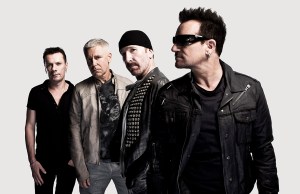
There have certainly been plenty of instances where my opinion has been out of step with the majority in the United States of America, but perhaps never has this been more true than when U2 pulled one of the most despised publicity moves in history when they gave away their 2014 album Songs of Innocence for free to every iTunes user in the country. While the majority seemed to be insulted by the fact that U2 had brazenly given them the LP, I had literally been on my way back to my college dorm fully expecting to buy the album on the Apple storefront only to find it already showed up as purchased. Baffled, I went to bed thinking I was the beneficiary of a weird glitch, only to wake up to the shitstorm Bono and company themselves likely woke up to Monday morning. Songs of Innocence was hardly my first introduction to the band, but it was yet another touchstone into my love affair with the group, which goes back to my earliest days of music fandom with their 2009 release No Line on the Horizon and Achtung Baby‘s seminal “Once.” Inevitably, I later became introduced with their true masterwork, 1987’s The Joshua Tree, which remains almost objectively one of the greatest Rock albums of all time. I recently saw a viral tweet going around asking users to consider the greatest consecutive three-track run on an album in music history. While I ultimately had to go with Darkness on the Edge of Town‘s run of “Candy’s Room,” “Racing in the Street,” and “The Promised Land,” The Joshua Tree‘s run of “Where the Streets Have No Name,” “I Still Haven’t Found What I’m Looking For,” and “With or Without You,” certainly makes a compelling case. My mom, who went through high school in the mid-’80s and attended no shortage of concerts during that time, said U2 was the only band she wasn’t able to get into because tickets sold out in literal seconds. At the time, she said she didn’t understand the hype. Decades later, it couldn’t be more justified, failed publicity stunts or not.
16. The Rolling Stones
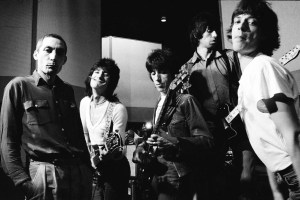
My wife and I have an ongoing joke where, when a Rolling Stones song comes on, I remind her that Mick Jagger is British. While she obviously recognizes that now, it was a legitimately necessary reminder toward the beginning of her exposure to arguably the most legendary piece of the British Invasion of the ’60s and ’70s and their dedication to replicating and modernizing the roots-based Blues acts of the Southern United States like Muddy Waters and Robert Johnson. But while much of the Stones’ best work takes queues from these early revolutionaries, the core duo of Mick Jagger and Keith Richards, along with a litany of other legendary instrumentalists like Bill Wyman, Charlie Watts and Mick Taylor, is the final evolution of that sound taken to heights few bands have ever reached. In particular, the band’s output around the turn of the decade from the ’60s to the ’70s is truly legendary, from the dark, Vietnam-era overtones of 1969’s Let it Bleed to the down and dirty Hard Blues of 1971’s Sticky Fingers, to the double LP excess of 1972’s Exile on Main St. It’s across these three key albums that the band’s creative peak was reached, armed with many of their best works including “You Can’t Always Get What You Want” and “Gimme Shelter” from Let it Bleed, “Dead Flowers” from Sticky Fingers and “Loving Cup” and “Tumbling Dice” from Exile. What’s amazing about that lineup is that every single one of those songs could claim to be among the greatest of all time, yet find another Stones fan and they could argue the same for a completely different lineup of tracks from those same LPs. Having been around since the ’60s, the band obviously has some other classics to its name, as well, including “Beast of Burden” from 1978’s Some Girls, “Worried about You” from 1981’s Tattoo You, and “Plundered My Soul,” an Exile-era outtake released for the first time in 2010, just as my musical interests were widening. Countless Rock bands have taken cues from the Stones since they came onto the scene in the early-to-mid ’60s, but few have ever matched their sheer quantity and quality of great music.
15. The Smashing Pumpkins
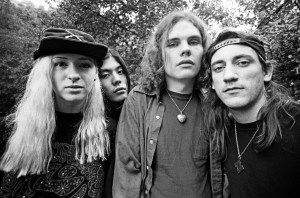
While I was familiar with The Smashing Pumpkins prior, mostly due to the inclusion of their seminal ballad “Today” in Guitar Hero: World Tour and their greatest hit “1979” in Grand Theft Auto IV, I associate my true entry point into heavy fandom with the band with my move across the country from Northeast Texas to Princeton, New Jersey in December 2019 to take a life-changing job with the, at the time, burgeoning renewable energy outlet NPM. It turns out you have a lot of time to kill when on a massive drive like that, and I spent a pretty sizable chunk of it listening to new albums I had never given a chance before. Two of them were The Smashing Pumpkins’ biggest classics 1993’s Siamese Dream and the epic two-disc 1995 follow-up Mellon Collie and the Infinite Sadness. Needless to say, I immediately fell in love and my early days in my new home were spent riding around to the sound of Billy Corgan’s demented yowl. Six years later, both albums still hit just as hard for me, filled to the brim with various renditions of the group’s two greatest tricks: over-the-top angst-filled tenderness found in achingly beautiful ballads like “Mayonaise” and “By Starlight,” and balls-against-the-wall angst-filled rockers like “An Ode to No One” and “Geek U.S.A.” I often joke with my wife that the band has two speeds and they excel at both of them. While most of my favorite songs from the band remain focused in those two landmark releases, it’s far from the bottom of their well of great material. Even their most recent release Aghori Mhori Mei has plenty to love from the swaggering “War Dreams of Itself,” to the heartfelt “Who Goes There,” to the epic “Edin,” all of which feel like they would’ve been just as home in the band’s ’90s heyday.
14. Radiohead
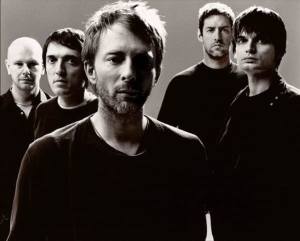
My introduction to Radiohead, arguably the greatest and most influential active Rock act at the turn of the century, came in one of the unlikeliest of places possible. Once again skewed by my entry into true music fandom around 2010, my entry point into this legendary act was perhaps their most overlooked album of all time: 2011’s The King of Limbs. What’s wild is, even having missed all of the greatest work leading up to that point, I was still all the way in. Since then, I have, of course, journeyed into their back catalogue and become a fan of Radiohead’s actual greatest works during their unbeatable stretch in the latter half of the 90s leading into the turn of the century from The Bends through OK Computer and Kid A, which is truly one of the greatest runs of albums from any act ever. All three of these LPs have been my favorites from this band, and had claim to the title of my favorite ever, at various points of my musical lifetime. Today, it’s OK Computer, which I would argue has the most consistency as well as the highest highs from the demented whine of “Climbing up the Walls” to the melancholy warble of “Let Down,” to the dynamic war beat of “Paranoid Android.” But in high school, I didn’t think there was any way you top the hypnotic Art-Rock of Kid A and in college nothing hit quite like the overbearing sadness of much of The Bends. That’s part of what makes Radiohead so brilliant; regardless of where you are in your life, they have something in their catalogue that will speak to you like few records can, an achievement they’ve proven out more consistently than almost anyone else over the course of the full breadth of my musical experience.
13. Kendrick Lamar
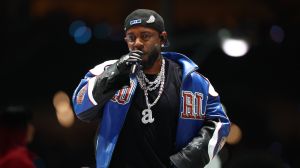
Noted Collaborators: George Clinton, Thundercat, James Fauntleroy, Ronald Isley
So much has changed in the Rap game since Kendrick Lamar burst on the mainstream scene in 2012 with good kid, m.A.A.d. city and its inescapable pair of hits “Bitch, Don’t Kill My Vibe” and “Swimming Pools (Drank).” We’ve had the collapse of Kanye West and Drake (the latter of which at the hands of Kendrick himself), the rise and fall of Trap and Mumble Rap, and, somewhat astonishingly, a clear fall-off of Hip-Hop’s dominance in the mainstream music scene in favor of more widely palatable Pop acts like The Weeknd, Bruno Mars and Ed Sheeran alongside Girl-Pop champions like Taylor Swift, Sabrina Carpenter and Ariana Grande. Over the last decade, even Kendrick himself has felt like he has been chasing the generational critical success of his 2015 magnum opus To Pimp a Butterfly, a concept album so grand in its ambitions and beloved by critics that going back to “regular” music in subsequent efforts like DAMN., Mr. Morale and the Big Steppers and GNX has felt like a step back. At the same time, Kendrick has never been hotter as a mainstream act fresh off of his Super Bowl victory lap following his massacre of Drake’s public reception in what may have been the most one-sided Rap beef of all time when all was said and done and “Not like Us” had conquered the charts and the mindshare of America. But even as the genre has fallen precipitously around him, Lamar has continued to build out far more than his fair share of brilliant tracks over the last decade from DAMN.‘s mind-bending “Lust,” to Mr. Morale‘s triumphant “N95” to the untoppable single “euphoria,” which takes my vote for his greatest diss track far and above even the inescapably catchy “Not like Us.” From hit-making beginnings to all-time great LPs to modern chart dominance, Lamar has remained a consistent Rap star to pull for for the last decade and a half. Running circles around everyone else in the genre doesn’t hurt.
12. TPR

Noted Collaborators: Roxane Genot, abbytheoboist, The Clarinerdist
It’s rare to listen to an artist and immediately recognize that it is a life-changing event. I struggle to think of an artist where I recognized that as immediately as I did when I discovered TPR for the first time many years ago with my headphones on as my brother and cousin laughed and talked about Final Fantasy VII, which we had all recently played for the first time. I was on the hunt for Final Fantasy music on Spotify before Square Enix went and added all of the main soundtracks to the service when I discovered his expanded Final Heaven: Melancholy Music from Final Fantasy VII album. It starts with a version of the Jenova theme, which is admittedly pretty easy to make great, but when I skipped ahead to “Rufus’ Welcoming Ceremony,” which is little more than a joke track in the original context, and realized he had made even that sound like a Zanarkand-level classic, I knew I had discovered something special. Ever since, TPR has been such a mainstay in my consistent rotation that I don’t think there has been a single Spotify wrap-up without him listed in at least in my top five artists. More often than not, he tops the list. While TPR’s piano arrangements of the Final Fantasy music is definitely his greatest trick, and the basis for my love of his work, pretty much anything else he touches also turns to gold. That includes some brilliant renditions of Koji Kondo classics from Super Mario 64 and The Legend of Zelda, but perhaps his greatest achievement is his rendition of another throwaway track, “Global Terminal,” written by Hitomi Sato for Pokemon HeartGold and SoulSilver, which is transformed from a digitized cacophany to a Pixar-esque, piano-laden masterpiece pushed over the top by brilliant accompanist The Clarinerdist. TPR may seem high on this list of all-time greats given his status primarily as an arranger rather than a composer, but the number of great works that he has maximized runs circles around the output of just about anyone else.
11. Bob Seger
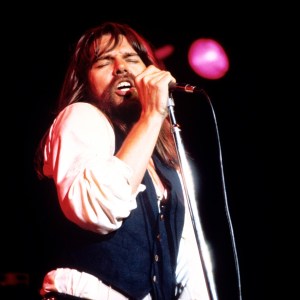
There’s perhaps no artist with a longer tenure in my life than Bob Seger. And yet, it took me until last year to actually listen to one (or 12) of his albums all the way through. My earliest musical memory is of listening to Seger’s classic “Old Time Rock & Roll” with my grandfather (which I mistakenly attributed to a random blue record that happened to be in his soundsystem at the time). I also recently discovered some early home video footage of my sleeping with a Seger record listening to “We’ve Got Tonight.” These were not tracks that followed me into adulthood, however, and I wasn’t inspired to really dive into his discography until 2025 when my cousin Brett mentioned his own awakening with his work. I knew Seger deserved to be on this list, but without diving in, it was impossible for me to determine how high. So dive in I did, ultimately listening to all 12 of the albums Seger currently has on Spotify including two live albums. Seger’s major commercial breakthrough was one of them, Live Bullet, and it makes sense; the energy he and the then freshly minted Silver Bullet Band brings to that set makes for an exhilerating listen even 50 years later and easily ranks among the greatest I’ve ever heard. His studio albums, while all at least solid, range a bit in terms of quality. While “Night Moves,” stands out as his undisputedly best single, 1978’s Stranger in Town stands out as Seger’s best LP, filled to the brim with classics like “Hollywood Nights,” “Still the Same,” “Old Time Rock & Roll,” and “We’ve Got Tonight” rubbing shoulders with some of his best underrated gems like “Brave Strangers,” “Till it Shines” and, especially “The Famous Final Scene,” which stands out as perhaps the greatest of his heartbroken power ballads (and, believe me, the competition is steep). While his ’70s output is rightly regarded as his best, 1986’s Like a Rock isn’t far behind his greatest works and actually surpasses many of his ’70s LPs. The album may not have been a big commercial winner for him, but beyond the oft-played title track is a litany of some of his best including “American Storm,” “Miami,” “The Ring,” “Tightrope,” and “It’s You.” Seger’s late-career offerings struggle to reach the same peaks as these earlier triumphs, but no fan should ever overlook “The Fire Inside,” which utilizes the E Street Band’s legendary Roy Bittan to deliver Seger’s greatest anthem since “Night Moves.”
10. Coldplay
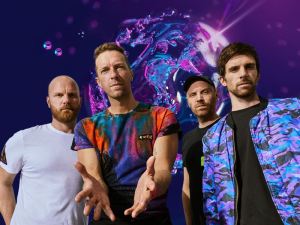
Few bands come out of the gate as strong as British Rock band Coldplay did at the turn of the century with their 2000 LP Parachutes and its seminal dual hits of “Yellow” and “Sparks,” two songs that were so universally appealing they remain the band’s top two hits on Spotify all these years later. And considering the run of hit singles and LPs this band has produced since including 2002’s A Rush of Blood to the Head featuring “Clocks” and “The Scientist,” 2005’s X&Y and its, at the time, inescapable “Fix You,” 2008’s Viva la Vida and its title track, 2011’s Mylo Xyloto featuring “Paradise” and “Every Teardrop is a Waterfall” and on and on and on. And yet, while these are the releases and tracks that defined much of my experiences with the band during their perceived heyday, the reality is the band has never been bigger than they are right now hitting a literal peak as I write this at more than 98 million monthly listeners on Spotify making them the number 1 most listened to band in the world and the 6th highest artist by monthly listeners on the platform beating out titans like Taylor Swift, Drake, Kendrick Lamar and Ariana Grande. While at least some of that may be attributable to their recent viral moment accidentally outing a cheating tech CEO at one of their concerts, they have consistently been in the top 10 artists on Spotify since I discovered the list last year. While their incredible back catalogue is no doubt the lead contributing factor to their longstanding success, I would argue their continued ability to merge optimism and undeniably catchy hooks as illustrated on their fantastic 2024 release Moon Music plays no small role. Take a listen to choice cuts like “Man in the Moon” or “GOOD FEELiNGS” and just try to tell me they don’t have anything to offer in our overly pessimistic modern age.
9. LCD Soundsystem
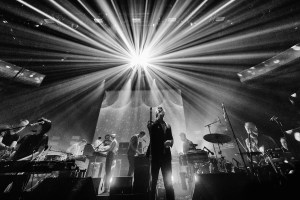
My fandom of LCD Soundsystem is a story of lost time, which is poetic considering the trajectory and lyricism of the band’s best work. Like many before me, I first discovered them through their now iconic paranoid anthem “Losing My Edge” and, while my exposure to that song was perhaps slightly later than the early buy-ins in 2010 vs. 2005, it was still a damn long time ago. While it was certainly an acquired taste, it was a taste I did gradually acquire but without moving on to investigate the other music the band had put out (which, by that time, was already almost everything), even after hearing the band’s greatest triumph and one of the greatest songs of all time, “All My Friends.” It wasn’t until the band’s comeback album American Dream in 2017 that I listened to one of their LPs all the way through. While I liked the album immediately, it eventually fell out of my rotation until I decided to re-investigate the band to determine where they should fall on this list and decided to listen to all four of their major releases: their self-titled debute from 2005, 2007’s brilliant follow-up The Sound of Silver, 2010’s This is Happening, and the afore-mentioned American Dream. While that initial album is little more than an enjoyable mess with the band clearly more focused on delivering catchy hooks without the depth to back them up, that all changed with The Sound of Silver which immediately shot up my list of the greatest albums I’ve ever heard when I heard it for the first time in its entirety last year year. Impressively, This is Happening isn’t far behind, delivering genius bits of songwriting like “You Wanted a Hit,” “All I Want” and “I Can Change,” and dialing in on that sardonic wit that now defines the group. Despite the quality of the sophomore and junior efforts, though, perhaps my biggest LCD Soundsystem hot take is that I still consider American Dream to be their best effort, just edging out The Sound of Silver with consistent quality and greatness from the temple that is “how do you sleep?” to the oddly inspirational “tonite” to the introspective title track to the driving “i used to” to the hypnotic “other voices.” Not since Guns N’ Roses has a band released so little music and yet been such a hypersonic strike of condensed genius that they can’t help but rub shoulders with the all-time greats. How poetic then that they headlined at Coachella together in 2016, reminding the players of today what it takes to reach the stratosphere. My only regret is that it took me as long as it did to get on board.
8. Father John Misty
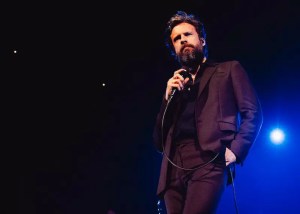
The fact that Father John Misty is as high as he is on this list when I have only heard two of his six major releases is a mind-blowing testament to the quality of those releases, an indictment on me for not diving deeper, and a stage-setter for an even greater rise for him up my ranks of all-timers. Like LCD Soundsystem before him, my first experience listening to a Father John LP was via his 2017 release (I had a ridiculously amount of car time that year spent listeing to new releases) Pure Comedy, a fascinating minimalist album full of depressing (yet impressively catchy) warnings (“Total Entertainment Forever”), shockingly sweet bouts of appreciation (“Smoochie”) and just straight-up gorgeous musical epics (“So I’m Growing Old on Magic Mountain”). At its core, though, it is an almost oppressively singular album with very little to offer musically beyond Father John’s ache-fueled voice and conservative approach to musical accompaniment. Considering this was my only touchstone with the man, you can imagine my surprise when I dialed into 2024’s Mahashmashana and was exposed to one of the most musically expansive and variety-packed albums I’ve ever heard. The album has it all from string-laden masterpieces like the title track and the eye-watering “Mental Health” to Beatles-esque swing (and weirdness) on “She Cleans Up,” to speaker-blowing explosions on “Screamland” to in-the-pocket funk on “I Guess Time Just Makes Fools of Us All” to the Lou Reed-esque “Josh Tillman and the Accidental Dose.” What’s amazing is how well Misty nails every approach, in most cases delivering the best versions of each one of those styles that I’ve ever heard. Not only is Mahashmashana the greatest album of this decade and an unmissable musical event, it is easily among the 10 greatest albums I’ve ever heard period. I can only imagine what he’ll have in store for the follow-up. More than likely, it’ll be something nobody expects.
7. John Craigie
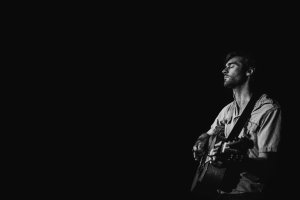
There’s no question I’m a huge fan of the artists in this tier of the list, but I don’t think I had ever seen the true depth of fandom until I met my wife and learned of her family’s obsession with singer-songwriter John Craigie. As I write this, my wife says she has literally lost count of the number of times she has seen him live (somewhere between 10 to 15 is her best guess), and it is virtually impossible to visit either of my in-laws without hearing at least one of his harmonica-laden tunes. While I struggle to understand why this singular man has captivated them to such a degree that they rarely choose to listen to anything else, I have to admit, I was sold on Craigie from the opening track of his brilliant 2018 album Opening for Steinbeck, which I listened to on Day 2 of my three-day long first date with my wife. It’s a fantastic record that mixes his brand of inter-song humorous storytelling with just the right amount of earnestness (“Dissect the Bird”), politics (“Presidential Silver Lining”), silliness (“Michael Collins”), romance (“Westbound Bart”), and just plain old brilliant songwriting (“Resurrection Bay”). Steinbeck remains my favorite of Craigie’s LPs, though perhaps studio album No Rain, No Rose, armed with its moving title track, his greatest hit (“I am California”), and a host of other great songs capped off by a fascinating cover of The Rolling Stones’ classic “Tumbling Dice,” is his best. His most recent live album Greatest Hits…Just Kidding…Live – No Hits damn near replicates the magic of Steinbeck thanks in no small part to its haymaker of a central hook that is “Mallory,” but his greatest single track, the Lou Reed-esque “Perseids,” can be found on his uniquely understated (and harmonica-less) studio LP Mermaid Salt. While his live albums all follow the same winning formula, I respect Craigie for constantly expanding and evolving his sound through his studio efforts from the New Orleans Jazz-inspired The Apocalypse is Over, to the more expressive No Rain, No Rose, to the impressively groovy Asterisk the Universe, to the rambunctious Pagan Church recorded alongside TK and the Holy Know-Nothings. But at the center of them all is Craigie himself and his penchant for mixing endearing stories with great songwriting. It’s a winning formula.
6. Lin-Manuel Miranda
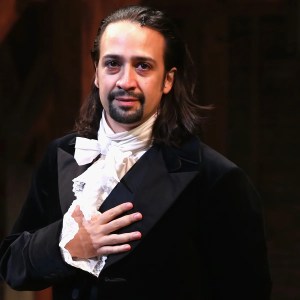
Noted Collaborators: Auli’i Cravalho, Christopher Jackson, Daveed Diggs, Leslie Odom Jr., Louise Bush, Nicole Scherzinger, Okieriette Onoadowan, Phillipa Soo, Rachel House, Renee Elise Goldsberry
It’s hard to understate the impact Lin-Manuel Miranda had on the musical landscape with the release of Hamilton in 2015, which became the musical event that everyone was talking about and nobody could escape thanks to the release of the unbelievably strong audio version of the show. It would be years before I would be able to see the show myself, but just listening to that gigantic epic of an album without visual accompanyment was an unforgettable experience of impeccable storytelling mixed with a varied and maximalist Hip-Hop-based sound that was unlike anything anyone had ever heard before. Considering Miranda’s status as the show’s composer, driving creative force and lead performer, it was a star-making work the likes of which has never been replicated since and only rarely, if ever, prior. His impact on the wider musical scene was immediate, starting with his work on 2016’s massively successful Moana film from Disney, filled to the brim with Hamilton-esque nuggets of brilliance, particularly at the film’s start with the dual assault of “Where You Are” and “How Far I’ll Go.” His work is so strong, in fact, that it makes the contributions from the film’s other composers seem particularly hollow by comparison, a problem that extended to the film’s 2024 sequel which had exactly zero iconic songs to its name marking an almost impressive drop off in quality. Miranda demonstrated his aptitude for hitmaking five years later with Encanto and its iconic “We Don’t Talk about Bruno,” which became so inescapable I’d wager more people know the track than the film. Through these three epochal works, and dozens of others in between, Miranda has emerged as arguably the greatest hitmaker of the last decade not named Taylor Swift and one of the greatest musical auteurs in the world.
5. Yasunori Nishiki

No video game company in the world has worked with a greater litany of composers than Square Enix to the point where they could be pointed to as the single greatest publisher of not only video games, but also music, in the world. The studio’s output was dominated throughout the ’90s by the inescapably brilliant Nobuo Uematsu (who we’ll speak about shortly), but a number of other phenomenal artists on this list including Yoko Shimomura, Masayoshi Soken, Tadayoshi Makino, Yasunori Mitsuda and Mitsudo Suzuki have passed through its gilded doors over the years. As great as they are, however, perhaps none have reached the same highs and, critically, the level of consistent greatness as Yasunori Nishiki, which is all the more impressive considering Nishiki has worked almost exclusively on the Octopath Traveler series. It’s not a stretch to say that Nishiki’s work is critical to those games’ appeal, particularly with his magnum opus 7+ hour odyssey that is the score for Octopath Traveler II. Never have I heard that amount of music devoted to a single project sound that consistently fantastic, and Nishiki’s work sings regardless of whether you’re playing the game at the time it hits your eardrums. From acoustic tragedies to Rock-opera-level grandeurs, to operatic nightmares, to piano-laden etudes, Nishiki’s work runs the gamut of what can be achieved with an orchestra of the scale he was given to work with by the masters at Square. And with Octopath Traveler 0 newly released, as well as other non-Octopath projects like Granblue Fantasy, Nishiki’s legend will no doubt continue to grow from here.
4. Guns N’ Roses
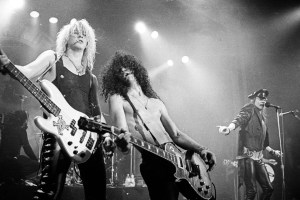
Guns N’ Roses is one of the rare artists on this list that came to me before my iPod era at the turn of the decade in late 2009, which means it was not a rare sight to find me walking around with a portable CD player with Guns N’ Roses’ Greatest Hits firmly lodged inside, particularly because that was about all my brother and I were allowed to listen to considering the mature themes of much of the band’s work (my step-dad took one listen to “It’s So Easy” and set us back by years). Our exposure to the band’s music slowly ballooned from there starting at first with other “clean” songs found on a weird Walmart collection of selections from the Use Your Illusion albums, to the few non-explicit tracks we could find beyond that on iTunes, to ultimately just diving all-in and listening to everything countless times. It’s not a stretch to say Slash himself was the single-biggest influence on my brother as he learned to play guitar, and the band completely re-contextualized our understanding of what Hard Rock could be after growing up with the prior generation of Van Halen, Aerosmith and The Who. Here was a band that could make a song about just about anything they wanted and make it unforgettable from public scrutiny (“Get in the Ring”) and toxic relationships (“Bad Obsession”) to drugs (“Mr. Brownstone”) and sex (“Rocket Queen” complete with a live sex act recorded on tape), to heartbreak (“November Rain”) and regret (“Estranged”). While their number of releases during their peak era between ’87’s legendary Appetite for Destruction and ’93’s less legendary (but still phenomenal) cover album The Spaghetti Incident? was low, the sheer amount of great music over the course of those seven years was almost unprecedented. When Axl Rose finally did return with the much anticipated Chinese Democracy in 2008, most wrote it off as the over-produced diary of a madman. While I don’t necessarily disagree, it came to become perhaps my favorite of the band’s releases given its dark subject matter, fascinating production, and expansion of what the band could be. Indeed, my favorite Guns track today is Chinese Democracy‘s title track, a supercharged anti-fascist anthem fueled by no less than five guitarists, multi-layered vocals, and a shockingly catchy hook. Even better, the reunited band with Slash, Duff and Axl still play it and other select tracks from the album to this day, providing fascinating insights into what these songs may have sounded like under the original lineup had the members been able to work out their differences at the time. Perhaps the most impressive thing about Guns N’ Roses to me has been their staying power. It’s a band that I’ve been listening to for well over a decade-and-a-half at this point and, while other artists from that period of my life like Aerosmith, KISS, The Who, Van Halen, and Michael Jackson have faded to various degrees over the years, my love and appreciation of Guns N’ Roses has only strengthened.
3. Taylor Swift
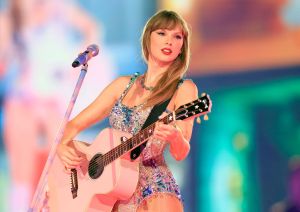
Noted Collaborators: Bon Iver
Few artists have ever managed longer trajectories in my musical repertoire than Guns N’ Roses, but Taylor Swift is in that rare airspace. Part of that was a factor of place and time; during my youngest years, I was exposed to her through my dad who was well-versed in the top country hits of the mid-2000s in which cuts from Swift’s first two albums like “Teardrops on My Guitar,” “Love Story,” “White Horse,” and “You Belong with Me” were firmly entrenched. I was immediately drawn to Swift more than any of the other country artists my dad was listening to at that time which I think was bolstered by the fact we were both teenagers and she had a knack for writing songs that kids and adults alike could relate to and invest in. If Swift would’ve stayed in that same lane for her entire career, no doubt she would’ve faded away like many of the other artists I listened to in my teenage years. Instead, she and her music grew along with me starting with 2010’s incredible Speak Now (which still stands as her greatest work to date) before maturing to the now legendary double LP Red in 2012. With each of these works, Swift further distanced herself from her Country roots, but she fully stripped herself of that identify once and for all with 2014’s seminal 1989. I’ll never forget that Disco-Pop opening hook of “Welcome to New York” heralding the start of an entire new stretch of her career; truly it is one of the most electrifying musical moments I can recall not unlike Radiohead’s transition from OK Computer to Kid A at the turn of the century. reputation was the first chink in Swift’s armor as it chased trends more than setting them, even if it was armed with one of her greatest songs to date in the explosive “Getaway Car.” I remember feeling concerned that Lover would mark a further decline with the launch of the horrendous opening single “ME!” alongside Pop-Punk moron Brendan Urie, but that ended up being an odd hiccup compared to the resounding strength of the rest of the record led by her most popular song to date “Cruel Summer” (which clearly should’ve been the lead single from the start) and the emotionally resonant “Cornelia Street.” Nobody could’ve predicted the stripped down sound of Swift’s next two works, the sister records folklore and evermore, which sounded perfect in the COVID-led doldrums of 2020 and early 2021. This period also marked the beginning of her re-recording of previous albums to reclaim them from an uncooperative owner in Scooter Braun (though she ultimately reclaimed the original masters in May 2025). Generally these albums are not major improvements on the previous works, often sounding virtually identical, but the re-recording of 1989 was notably worse than the original material thanks to its oddly treble-heavy mixing. Generally, though, up to this point, each record seemed to grow Swift’s fame and legend, successfully bridging the gap from Millennial long-timers to a new Gen-Z fanbase that absolutely adored her much-lauded 2022 release Midnights. It’s rare for an artist to grow their fame as quickly as Swift did with that record, particularly when it is easily her worst effort to date filled to the brim with reputation-minus trend chasing and some of the worst songwriting of her otherwise sterling career. Again, I feared that I might have “grown out” of my own Swift era considering my massive disagreement with the critical and commercial success of Midnights, but Swift roared back for me with 2024’s The Tortured Poets Department led by my favorite of her songs to date, the toweringly optimistic title track. That brings us to the divisive The Life of a Showgirl, which is solid, but definitely a noticeable step down from the grandeur of The Tortured Poets Department and is particularly lacking in true standouts. Ultimately, while Swift’s catalog isn’t perfect, no Pop hitmaker has managed to stay as relevant and consistently great as she has over the course of the last two decades. Each of her works manage to stand out and largely excel on their own merits as Swift continues to remake and recontextualize her work for the moment. Unpredictable, smart, and ever endearing, Swift’s legend only seems to continue to grow and, best of all, there’s really no way to know what she’ll do next.
2. Nobuo Uematsu
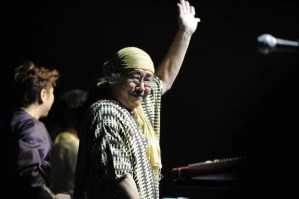
When it comes to varied and unpredictable yet consistently great brilliance, it’s really impossible to do better than Squaresoft’s seminal composer Nobuo Uematsu, famed auteur of the soundscape of the Final Fantasy series during its ’90s heyday. No artist I’ve ever been exposed to has a body of work even hear Uematsu’s during the period from 1987 through the early 2000s, during which he unleashed an unbelievable 15 years of consistently fantastic, groundbreaking music at an alarmingly fast pace. In the late ’80s alone, Uematsu scored the original two Final Fantasy games which included such game-changing works as the series legendary “Prelude,” main theme, and Chocobo theme, in addition to scoring the original SaGa title (called Final Fantasy Legend in the US) before the turn of the decade. His pace in the early ’90s was equally impressive scoring no less than four massive works of art for Final Fantasy III – VI over the course of the first half of the decade before taking his time to deliver perhaps the most iconic musical work in the history of video games via Final Fantasy VII. Somehow, while not as popular, his work on Final Fantasy VIII became his magnum opus, exceeding even VII‘s lofty quality before Uematsu put a bow on his major run with the nostalgically fueled Final Fantasy IX in 2000. Just naming these works is not enough to fully contextualize the scope of Uematsu’s work during this time; while the original Final Fantasy score consisted of a comparably tame 20 tracks, by Final Fantasy III alone that had more than doubled to 44, leaping to 60+ by Final Fantasy V, 85 in Final Fantasy VII, and a whopping 110 by Final Fantasy IX. The variety on display during this period is equally impressive as the scope; just listen to the bass heavy groove of Final Fantasy VII‘s “The Oppressed” compared to the demented operatic grandeur of Final Fantasy VI‘s “Dancing Mad” or the calm acoustic tones of Final Fantasy VIII‘s “Breezy.” These tracks are all wildly different, yet include the slightly off-kilter unique charm that Uematsu managed to bring to all of his work, regardless of the instrumentation. That really shines when listening to his earliest work on the first three Final Fantasies through a fully orchestrated lens, a task made beautifully easy thanks to the Distant Worlds series of albums. Take a listen to the original works compared to the fully orchestrated medley found on the first Distant Worlds album from 2007 and discover the truly classical chops driving Uematsu’s work on the limited sound chip of the NES. While Uematsu largely retired from full-time composition following Final Fantasy IX, he continued to lead major works like Blue Dragon and Lost Odyssey while still delivering some of the most memorable music from other releases including Final Fantasy X‘s “To Zanarkand,” Final Fantasy XII‘s “Kiss Me Good-Bye,” and even Super Smash Bros. Brawl‘s legendary main theme. Even into the 2010s and beyond, Uematsu has continued to release great music including selections from Final Fantasy XIV, The Last Story, Fantasy Life, and Granblue Fantasy while his music is further immortalized through the Final Fantasy VII remake trilogy and the work of phenomenal arrangers like some of those that appear on this very list (TPR, Melandru, et al). Now presiding over a 40-year body of work, Uematsu stands tall as not only the greatest musical composer of our modern age, but one of the most versatile, unpredictable and consistently phenomenal of all time.
1. Bruce Springsteen and the E Street Band
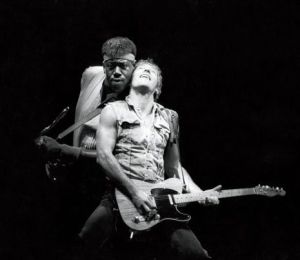
For many of the artists on this list, the difference between one place vs. another is a hair’s breadth. Indeed, I have spent countless hours tinkering with this list and moving some of the mid-tier artists around long after I finished my initial version. But the degree to which Bruce Springsteen and the E Street Band is my number 1 couldn’t be wider. Using the complex math-based formula I used to determine placement, Springsteen and company outpaced the solid number 2 artist here Nobuo Uematsu by a ratio of nearly 3 to 1. His dominance on my musical life is absolute and it is virtually impossible to fathom a different artist rising to take his place. One thing that unites many of the top artists on this list is an appreciation for their full body of work. But no artist in history has had a body as lengthy, storied, varied and brilliant as Springsteen’s, a man whose work is go great he literally just released seven albums worth of unreleased material last year, more than a half century since the release of his first record, and even that is running circles around even the best works of many other great artists. While the full breadth of Springsteen’s catalog is the stuff of legend, his greatest run was definitely his first in the ’70s with the release of four truly brilliant albums that merged the grandiose, maximalist sensibilities of the E Street Band with the greatest songwriter that has walked the earth. Although it took until 1975’s Born to Run for Springsteen to break through to the mainstream and all the way until ’84’s Born in the U.S.A. for him to be regarded as the legend he always was, his career was off to an immediately phenomenal start with 1973’s dual-relases Greetings from Asbury Park and The Wild, the Innocent and the E Street Shuffle. Indeed, if any other artist had released two albums of even the same quality as these two albums over the course of a decade, much less a single year, they would be a shoe-in for the top 10 if not the top 5. The Wild, the Innocent and the E Street Shuffle in particular is so packed to the brim with all-timers, it’s almost mind-boggling to imagine that Springsteen was able to top it. But he did, twice, in the same decade, first with 1975’s triumphant Born to Run and again with 1978’s darker, more varied, and even better Darkness on the Edge of Town. These three album alone constitute my top three albums from anyone ever, from The Wild, the Innocent and the E Street Shuffle‘s dual masterpieces of “Incident on 57th Street” and “New York City Serenade” to the greatest songwriting I’ve ever been exposed to on Born to Run‘s “Thunder Road,” “Backstreets,” and “Jungleland,” to the shockingly powerful trio of Darkness on the Edge of Town‘s “Something in the Night,” “Racing in the Street” and “The Promised Land.” All of these songs are easily among the top 50 I’ve ever heard and would be held up as any other artist’s greatest triumphs. On these albums, they threaten to be overshadowed by bigger hits like “Rosalita,” “Born to Run,” and “Badlands,” which are all legendary in their own rights. While no other run of Springsteen’s career could match the quality of his output in the ’70s, the quantity soared in the ’80s without a notable hit to the quality across such masterworks as the expansive The River, the paired back and somber Nebraska, the earthshaking Born in the U.S.A. and the understated Tunnel of Love. While Springsteen foolishly disbanded the E Street Band for his ’90s run, which saw a major commercial and critical decline for him, he still released a number of gems during this period like Human Touch‘s “Roll of the Dice” and Stranger in Town‘s “Better Days,” not to mention perhaps the greatest compilation of unreleased recordings ever compiled with 1998’s Tracks, a sprawling 4+ hour epic that includes such masterpieces as “Thundercrack,” “Frankie” and “Brothers under the Bridge” which are so incredible it is legitimately baffling that they didn’t find their way onto something before then. Springsteen reunited the E Street Band in 1999, which led to perhaps the greatest live tour of all time and a career rejuvination that found him as relevant as ever through releases like 2002’s 9/11-inspired The Rising, late 2000s sister albums Magic and Working on a Dream, and 2012’s politically charged Wrecking Ball, which was released just after the death of the E Street Band’s legendary sax man Clarence Clemons. For my money, though, it’s 2020’s Letter to You that stands as Springsteen’s greatest work since his Born in the U.S.A. heyday; it’s an epic album that leans on the full power of the E Street Band to deliver a collection of songs that are shocking in both scope and consistent quality from an artist entering his sixth decade of activity. On that note, it is impossible to overstate the importance of the E Street Band’s musicianship and cameraderie on Springsteen’s music; while truly solo albums like Nebraska are beloved, you just can’t compare the singular sound of something like “Atlantic City” with the 10-minute blowout of “Jungleland” or the power of “Backstreets.” Thankfully, Springsteen has been ridiculously generous through his release of live recordings alongside the E Street Band, which is where he is at his best. The giant compilation album released in 1985 is the most famous and celebrated example of this, and it is no doubt magical, but for my money it’s the recordings of singular shows like the band’s 1975 show at London’s Hammersmith Odeon or The “Legendary” No Nukes concert from 1979 that stand as the greatest live triumphs of his back catalogue. Impressively, the band and its frontman have stayed just as solid over the course of the years all the way to the present day; I saw them live for the first time in 2023 and not only was I impressed by their sound and endurance, I couldn’t believe the expansiveness of their setlist which stretched all the way back to Springsteen’s earliest recordings like “Kitty’s Back” while eschewing classic hits like “Born in the U.S.A.” that no other artist would probably ever skip on a show for the rest of their lives. Springsteen released a compilation record from that tour called Road Diary in 2024 and would you believe it if I said it was every bit as good as The Born in the U.S.A. Tour compilation released that same year? I wouldn’t blame you if you didn’t, but I dare you to listen and report back otherwise. With a body of work matched only by the quality of his songwriting and incredible musical companions in the E Street Band, I’ve only scratched the surface of what I love about Bruce Springsteen through this essay, but hopefully you can at least begin to glean from my words here why I hold him in such high regard as my undisputed pick for the greatest musical artist of all time.


 The Soundtrack Online